
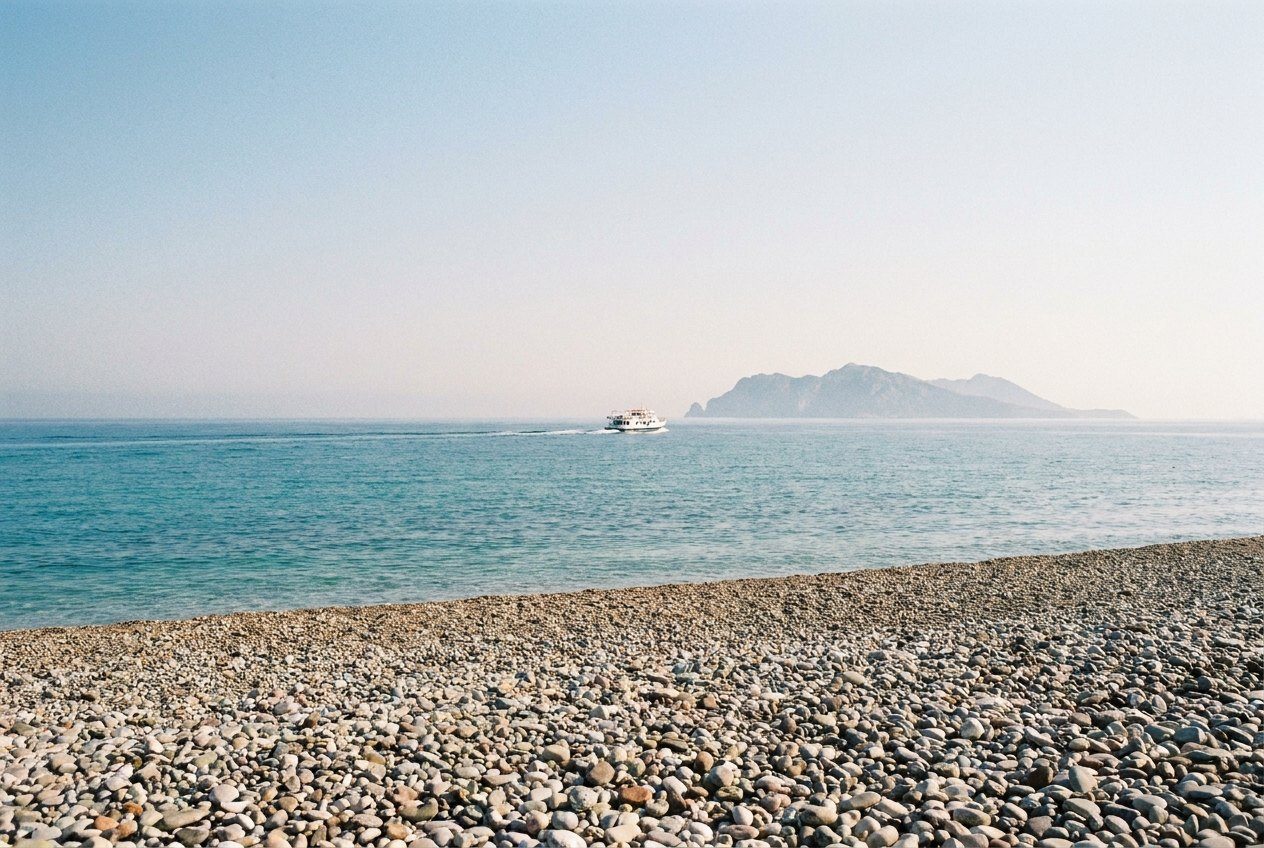
On the coastJuly and August bring heat, full beaches and slow traffic on the coast road. Ferry timetables shift with the season.
Sarandë faces south-west across a narrow strait, and on most days the long grey-green shape of Corfu fills the horizon. That view says a lot about the town. It has always looked outwards, to the island, to the sea lanes and to the visitors who arrive by boat, and its year turns on the weather and the water: a busy, bright summer, two long and gentle shoulder seasons, and a quiet winter when much of the waterfront pauses.
When you come shapes almost everything about a stay here, from how warm the water is to how easily you can park near a beach. This guide covers the months, the sea, and the short crossing to Corfu.
Spring: green slopes, fresh sea
From April the hills around Sarandë turn green, wild flowers fill the olive terraces, and the light is clear. Days can be warm enough for lunch outside, but evenings are cool and the sea is still fresh from winter. Hardy swimmers go in during May; most people find the water comfortable from late May or June.
Spring is a good time for the sights that are hard work in the heat. The ruins at Butrint are pleasant to walk in the morning sun, the inland trips to the Blue Eye and Gjirokastër are cooler, and the coast road is quiet. Some seasonal places along the beaches are only just opening, so the choice is narrower than in summer, but the towns themselves are open year round.
May, June and September: the best of the coast
If you can choose freely, choose late May, June or September. The sea is warm or getting there, the beaches have space, and the heat is strong but bearable. In June the days are long and the water warms week by week. In September the sea is at its warmest after a whole summer of sun, the crowds have thinned, and the evenings on the seafront promenade are mild and unhurried.
These are also the easiest months for driving the Riviera. Parking near the beaches is simpler, the bends are quieter, and you can stop where you like without arriving at dawn to claim a space.
July and August: heat and crowds
High summer is hot. Afternoon temperatures are often well into the thirties, the sun is fierce from late morning, and shade becomes the most valuable thing on any beach. This is the season of full sunbeds, busy waterfronts and late nights, when visitors from across Albania, Kosovo and abroad fill the coast. Beaches such as Ksamil and the coves at Dhërmi and Jale are at their most crowded, and traffic on the roads slows.
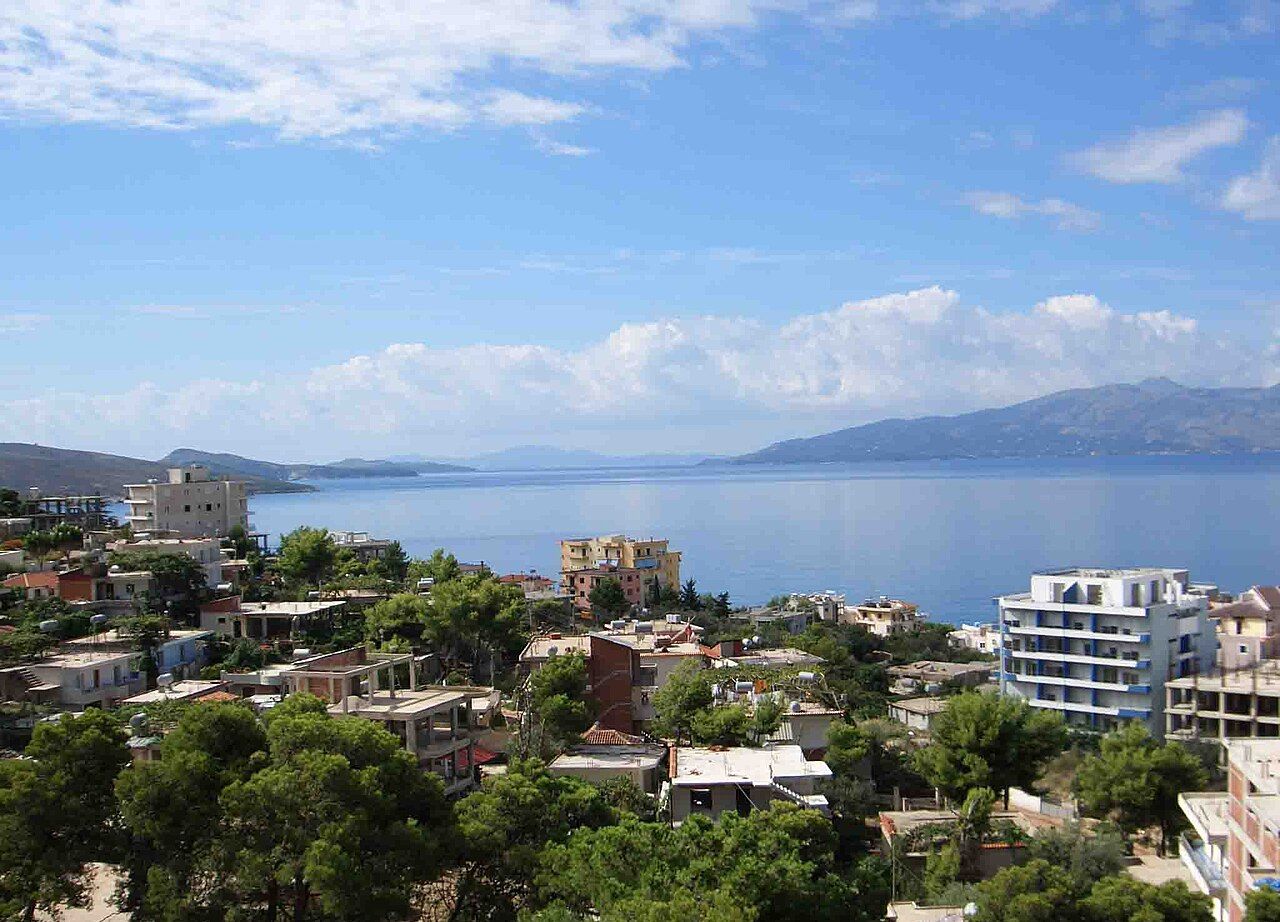
Onward · SarandëLëkurës Castle and the view over the baySummer works best if you live by the heat. Swim early, rest in the middle of the day, and go out again when the sun drops. Carry water everywhere, wear a hat, and expect prices for rooms, sunbeds and meals to be at their highest of the year.
Autumn and winter: the quiet months
October is often still warm, and the sea usually holds its heat well into the month, so swimming is possible on calm days. Rain becomes more likely as autumn goes on, and by November the coast is quieter.
Winter is mild compared with the mountains inland, but it is grey and wet for spells, and storms can roughen the sea. Sarandë itself carries on as a working town, with shops, cafes and daily life, but many beach places and seasonal businesses along the Riviera close. If you come in winter, come for the light, the walks and the empty sights rather than the beaches.
Across the strait to Corfu
Ferries and faster hydrofoils cross from Sarandë port to Corfu town. The crossing takes roughly half an hour to over an hour, depending on the vessel and the sea. Departures are most frequent in summer and thin out in winter, and timetables change from season to season. In rough weather, sailings can be delayed or cancelled.
The crossing is also a border. Albania is not in the European Union, while Corfu is part of Greece and of the Schengen area, so you pass through passport control on both sides. Carry your passport, or a national ID card if your nationality allows it; Schengen entry rules apply on the Greek side. Arrive at the port with time to spare for checks.
Many visitors cross for a day: the old town of Corfu, its forts and its arcaded streets are a short walk from the port. Others use the boat as a way in or out of Albania, flying to Corfu and crossing to Sarandë by sea.
Money and practical notes
The Albanian lek is the currency. Euros are widely quoted along the coast, and some places accept them, though change is usually given in lek and the rate is not always favourable. Cards are common in town but not universal on the beaches and in villages, so carry some cash. On the Greek side, the euro is the currency.
- Keep your passport or ID with you on the boat, not in your luggage.
- In summer, carry water, sunscreen and a hat for the port as well as the beach.