
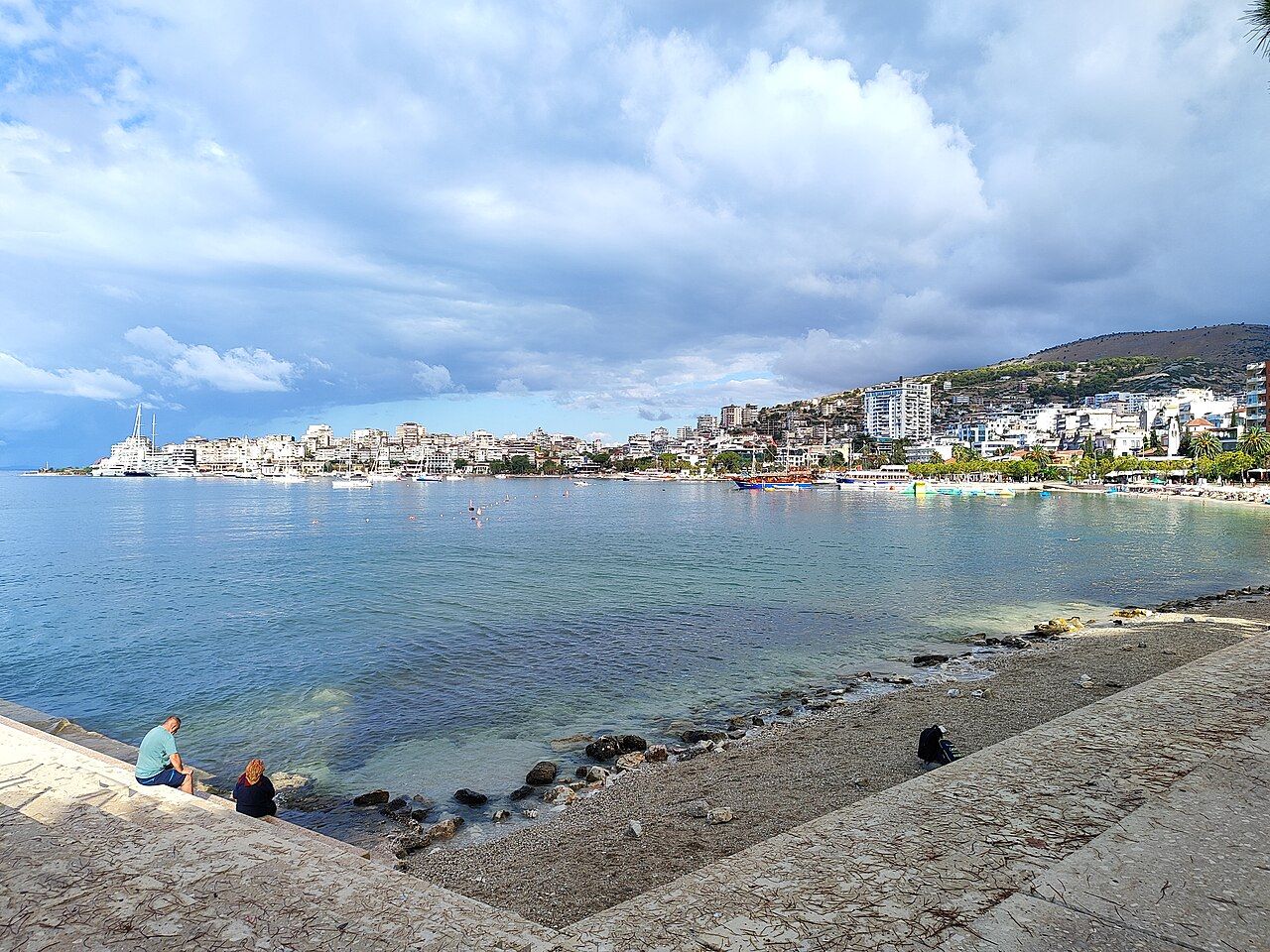
On the coastMidday in July and August is hot on the open stone with little shade; walk early or after six. The bay is usually calm, though a strong wind can stir it.
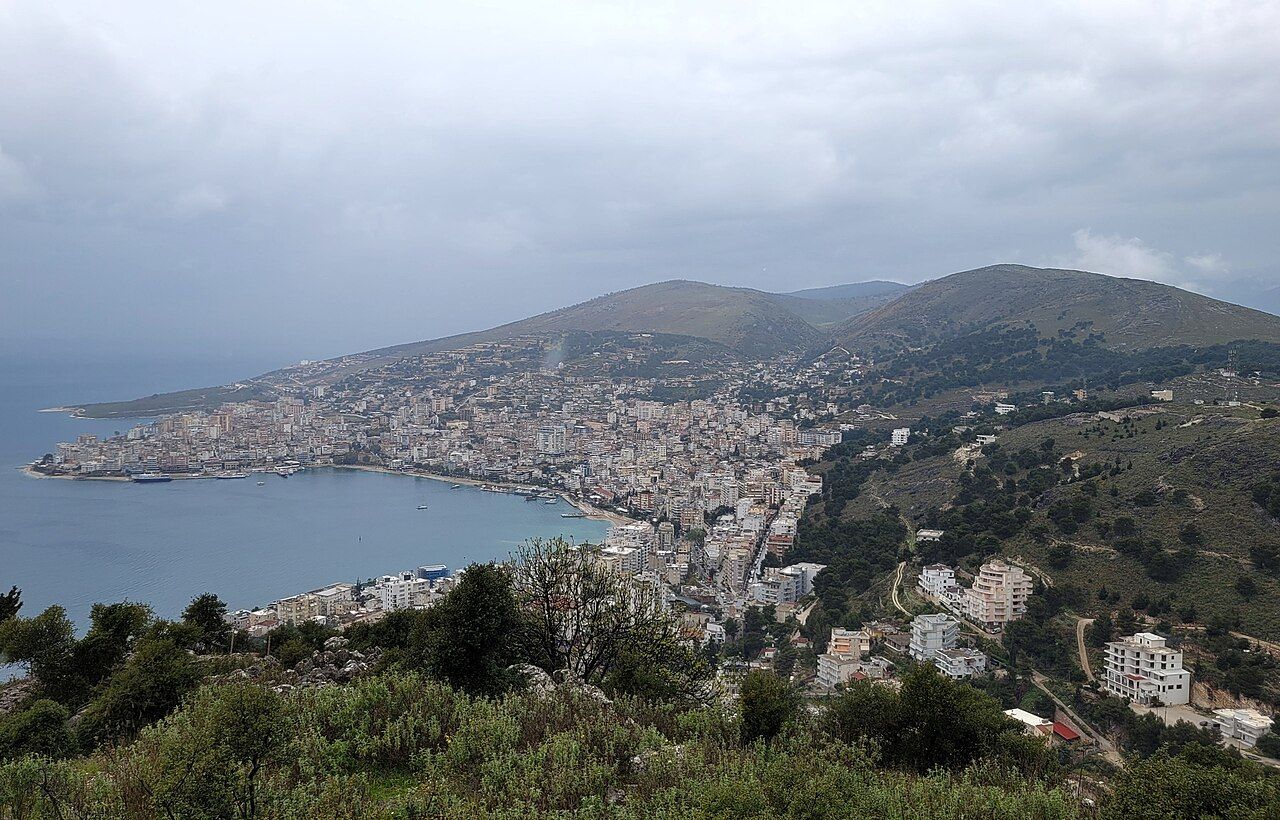
Sarandë faces west across a horseshoe bay of the Ionian Sea, and almost everything in the town leans towards the water. Apartment blocks climb the slopes behind, balconies stacked one above another, and below them runs the promenade: a long, paved seafront that follows the curve of the bay from the port at one end towards the quieter beaches at the other. If you only do one thing in Sarandë, it is this walk, ideally twice, once in the soft morning light and once at dusk when the town turns out to stroll.
Across the water lies Corfu. At the narrowest point of the strait the Greek island is only a few kilometres away, close enough that its mountains fill the horizon and, after dark, its lights show along the shore. The view frames the town's whole story: a small Albanian port looking out at a neighbour that spent the second half of the twentieth century on the other side of a closed border.
A bay shaped like a horseshoe
The shape of the bay is the first thing you notice from any height. The town wraps around a curve of water that is sheltered on most days, with low hills rising behind it. The ridge to the south-east carries the walls of Lëkurës Castle, and a hill above the town holds the ruins of the monastery that gave Sarandë its name. From the promenade you can see both on a clear day, which helps you get your bearings before you go up.
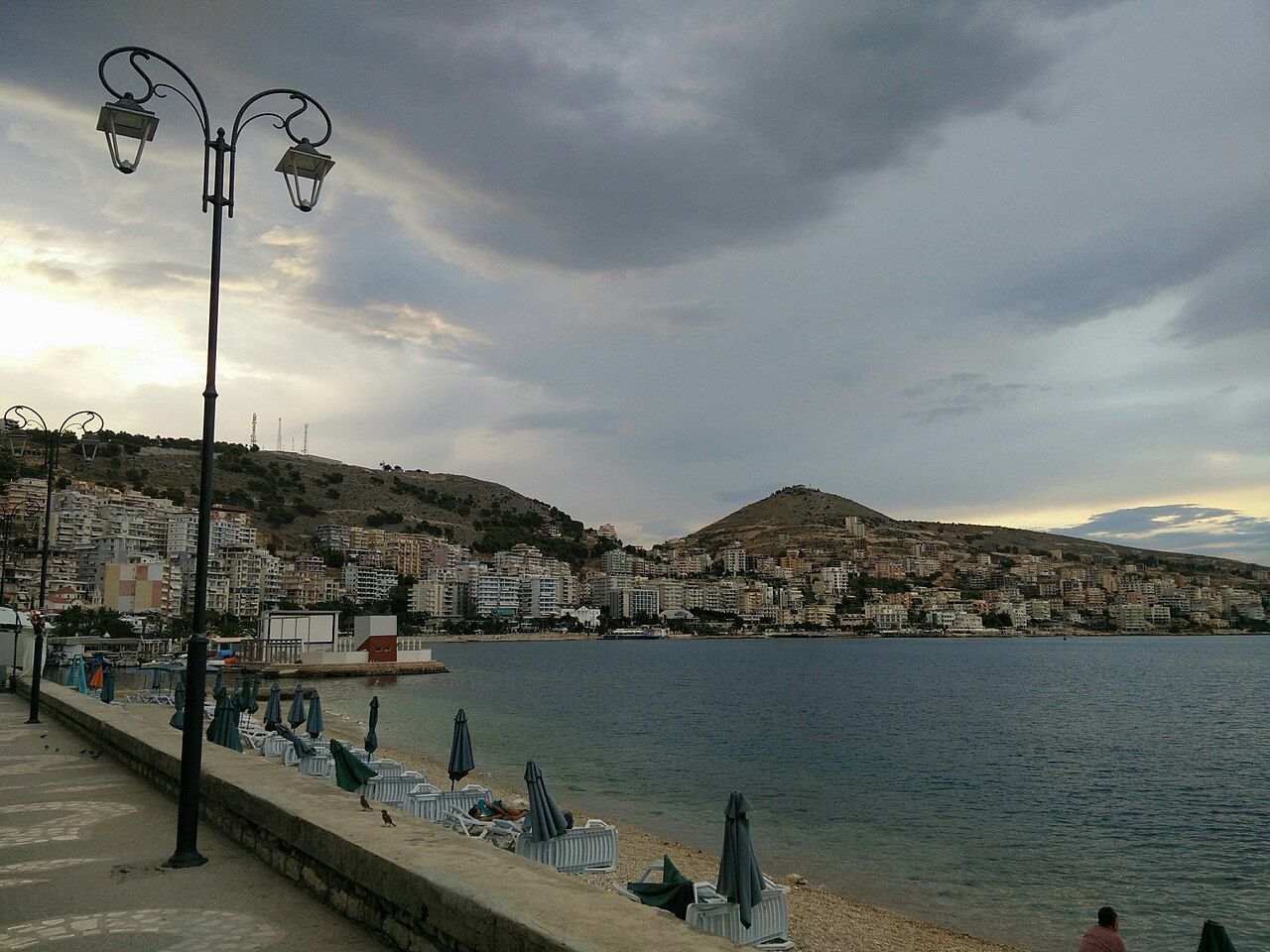
The seafront itself is a mix of wide pedestrian stretches, palm-lined sections and short runs where the walkway narrows beside the road. Small pebble and shingle beaches sit below the sea wall in several places. Steps lead down to the water, and on summer mornings you will see people swimming off them before the heat builds. The sea here is generally clear and calm, though the town beaches are busy in high season and the water near the port is better left to the boats.
Walking the full length at an easy pace takes well under an hour, longer if you stop, and most people stop. Benches face the sea along much of the way. Cafés and ice cream counters spread their tables onto the pavement in the busier central stretch, and kiosks sell corn on the cob and roasted nuts in the evening. None of it is hard to find, and none of it needs planning.
The evening xhiro
The xhiro (pronounced roughly "jee-ro") is the evening stroll, and it is one of the most likeable habits in Albanian town life. As the heat drops in the early evening, families, couples, groups of teenagers and older people in their good clothes walk the seafront slowly, often back and forth over the same stretch. Nobody is going anywhere in particular. The point is to be out, to see and be seen, to meet neighbours and to enjoy the cooler air.
The rhythm is easy to join. Walk slowly, keep to the flow, and let the children on scooters and the prams go first. In summer the xhiro can run well past dark, with music drifting from terraces and the lights of Corfu coming on across the strait. Outside the high season it is gentler and more local, and often the better time to see it. You will notice that the stroll is less about the destination than the company, and that you are welcome to be part of it simply by walking.
Nobody is going anywhere in particular.
Sunset over the bay is the other draw. The sun goes down beyond the sea and the northern headland, and the light turns the water copper for a while before the lamps come on. Find a spot on the sea wall a little before, because in July and August the central stretch fills quickly.
A town that grew fast
For most of the twentieth century Sarandë was a small place: a port, a few streets of low buildings and a waterfront lined with palms. During the communist decades, when Albania was among the most closed countries in Europe, travel in and out was tightly controlled, and Corfu, so close across the water, was effectively out of reach for ordinary Albanians.
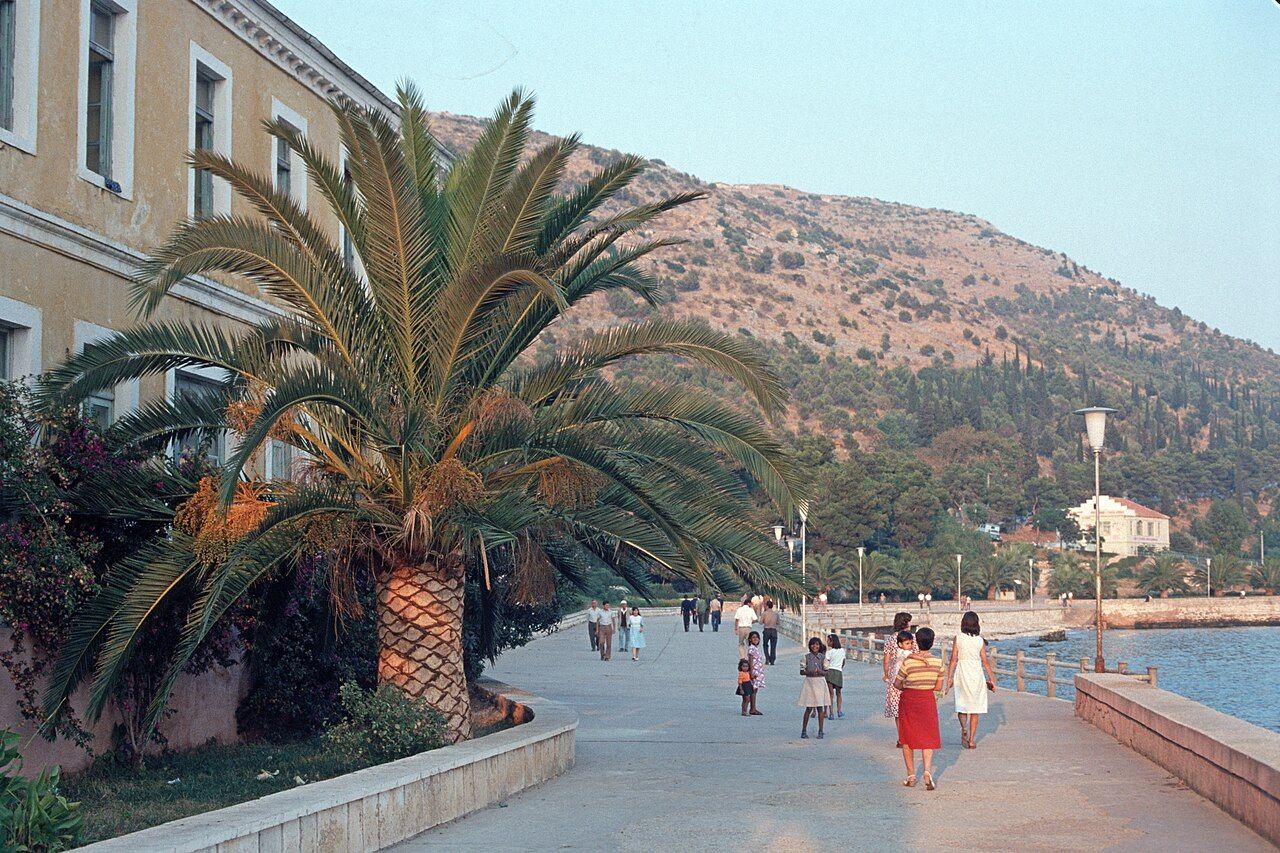
After the regime fell in the early 1990s, the town began to change quickly. Tourism arrived, first from within Albania and the region, then from much further afield, and construction followed it. Hotels and apartment blocks went up along the bay and climbed the hillsides, often faster than roads, drainage and planning could keep pace. The result is the skyline you see today: dense, mostly modern, and very different from the low town in older photographs. It is worth knowing this history plainly. The building boom brought jobs and life to the coast, and it also crowded parts of the shore. Both things are true, and you see both from the promenade.
Older layers are still here if you look. In the middle of town, a short walk inland from the seafront, the excavated remains of the ancient synagogue of Onchesmos sit among the apartment blocks, a reminder that this harbour was a settlement long before the Ottomans or the twentieth century. The town's name, too, reaches back to the Byzantine monastery on the hill above.
Onward · SarandëThe Monastery of the Forty SaintsThe port and the ferries to Corfu
At the northern end of the bay, the port is where the promenade starts or finishes, depending on which way you walk. Fishing boats, excursion boats and private yachts share the harbour with the ferries and hydrofoils that cross to Corfu. The crossing is short, and on a calm day the boats look almost as if they could be making a trip along the coast rather than to another country.
Services are fewer outside summer. Remember that Corfu is in Greece and the European Union, which means a border crossing with passport checks in both directions. Our guide to seasons, sea and the Corfu ferry covers the practical side in more detail.
Even if you never board, the port is good to watch. Boats come and go through the day, and in the morning the harbour is busy with people heading out to the beaches further south.
Using the promenade as your base
Because the town is built around the bay, the promenade is also the easiest way to get around. Most of the centre is within a few minutes of the sea, and many of the places you will want to reach start from a point along it. Local buses and taxis gather near the centre, and the road south leads within about half an hour to the ancient city of Butrint and its lagoon.
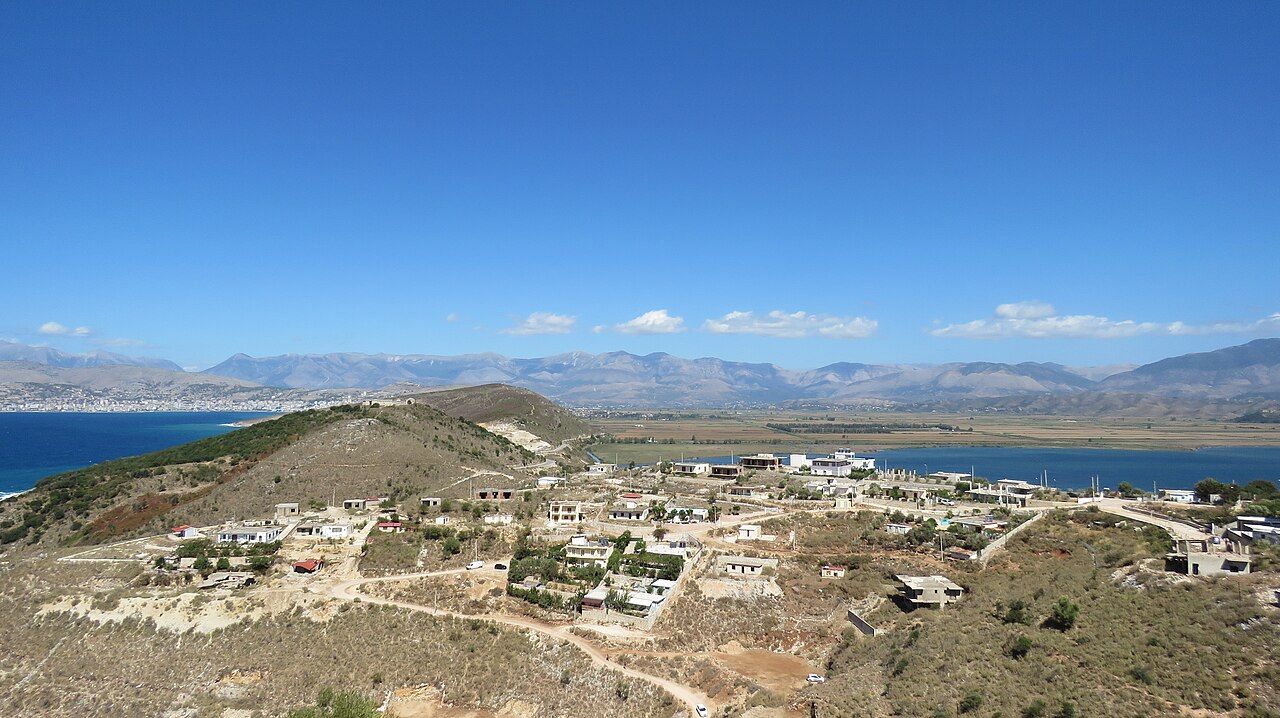
Heading out of town, the view changes quickly. Within a few minutes of the last apartment blocks the land opens into scrubby hills, olive trees and the wide, flat water of the lagoon, with the mountains of the mainland rising behind. Looking back from those hills, the town is a pale strip along the bay. It helps you understand how compact Sarandë really is, and how much of the coast around it is still open.
When to walk it
Early morning is the quietest time: the light is soft, the cafés are setting up and the bay is often glassy. Late afternoon and evening bring the xhiro and the sunset. Midday in July and August is the time to avoid, since the stone holds the heat and shade is patchy along some stretches.
- May and June: warm days, the sea warming up, the town busy but not yet full.
- July and August: the peak, with crowded beaches, late nights and the liveliest xhiro.
- September and October: warm sea, softer light and a more relaxed seafront.
- Winter: quiet and local, many seasonal businesses closed, but the walk is still pleasant on a bright day.
Whatever the season, carry water, wear something on your head at midday and give yourself time to stop. The promenade rewards slowness more than distance.