
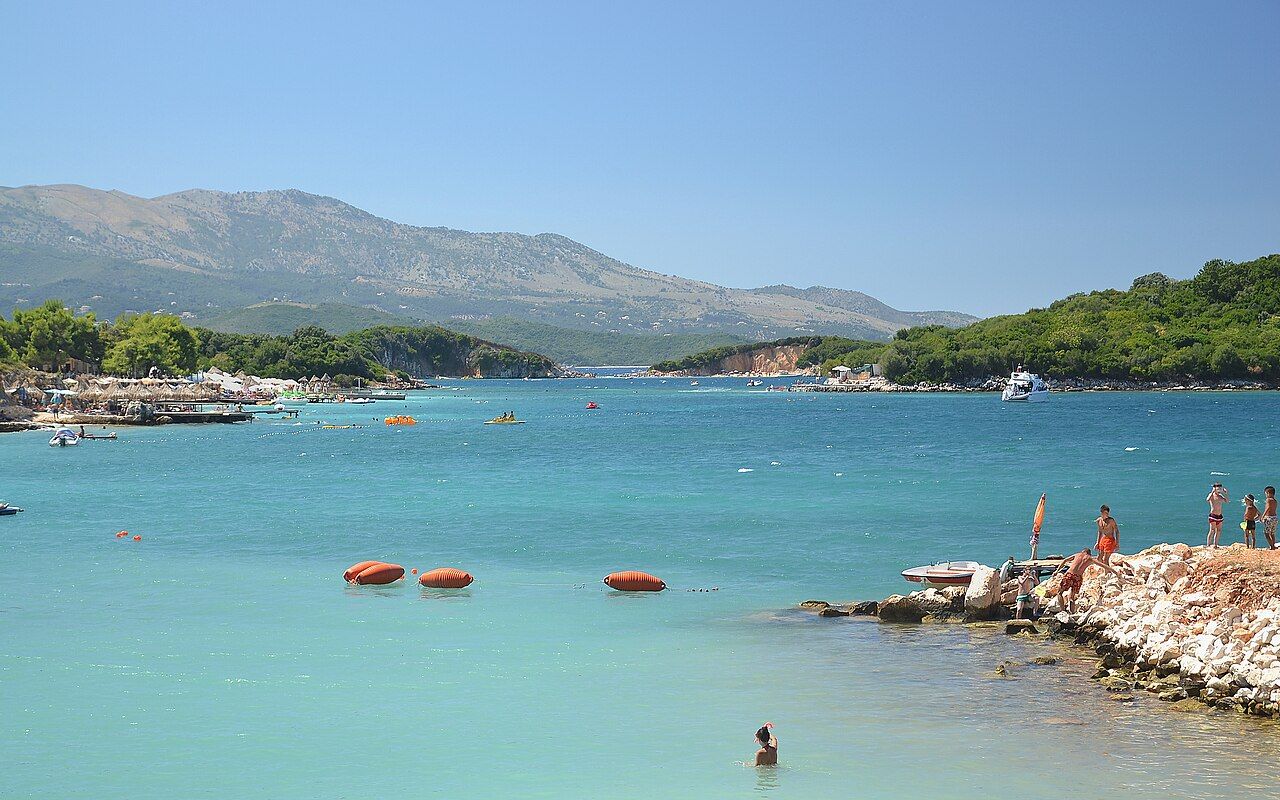
On the coastIn July and August the coves fill with rows of sunbeds and parking is hard. Come early or late, carry water shoes for rocky entries, and watch for boats near the islands.
Ksamil sits on a narrow strip of land between the open sea and Lake Butrint, a short drive south of Sarandë and just before the ruins of Butrint. Its fame is simple: water so clear and pale that the sea floor shows through it like glass, small coves of white sand and pebble, and a scatter of low wooded islands a short swim from the shore. Across the strait, the mountains of Corfu fill the western horizon.
It is also, in high summer, one of the busiest stretches of coast in Albania. Knowing when to come, and how the coves work, makes the difference between a crowded day on a sunbed and a morning swim in near silence.
The water and the coves
The coastline around Ksamil is a chain of small bays separated by low rocky points. Some coves have fine pale sand; others are pebble or broken limestone, with flat rock shelves you can step off into deeper water. The sea here is sheltered by Corfu and by the islands themselves, so on most summer days it is calm, and the shallows run out a long way before the colour turns from turquoise to deep blue.
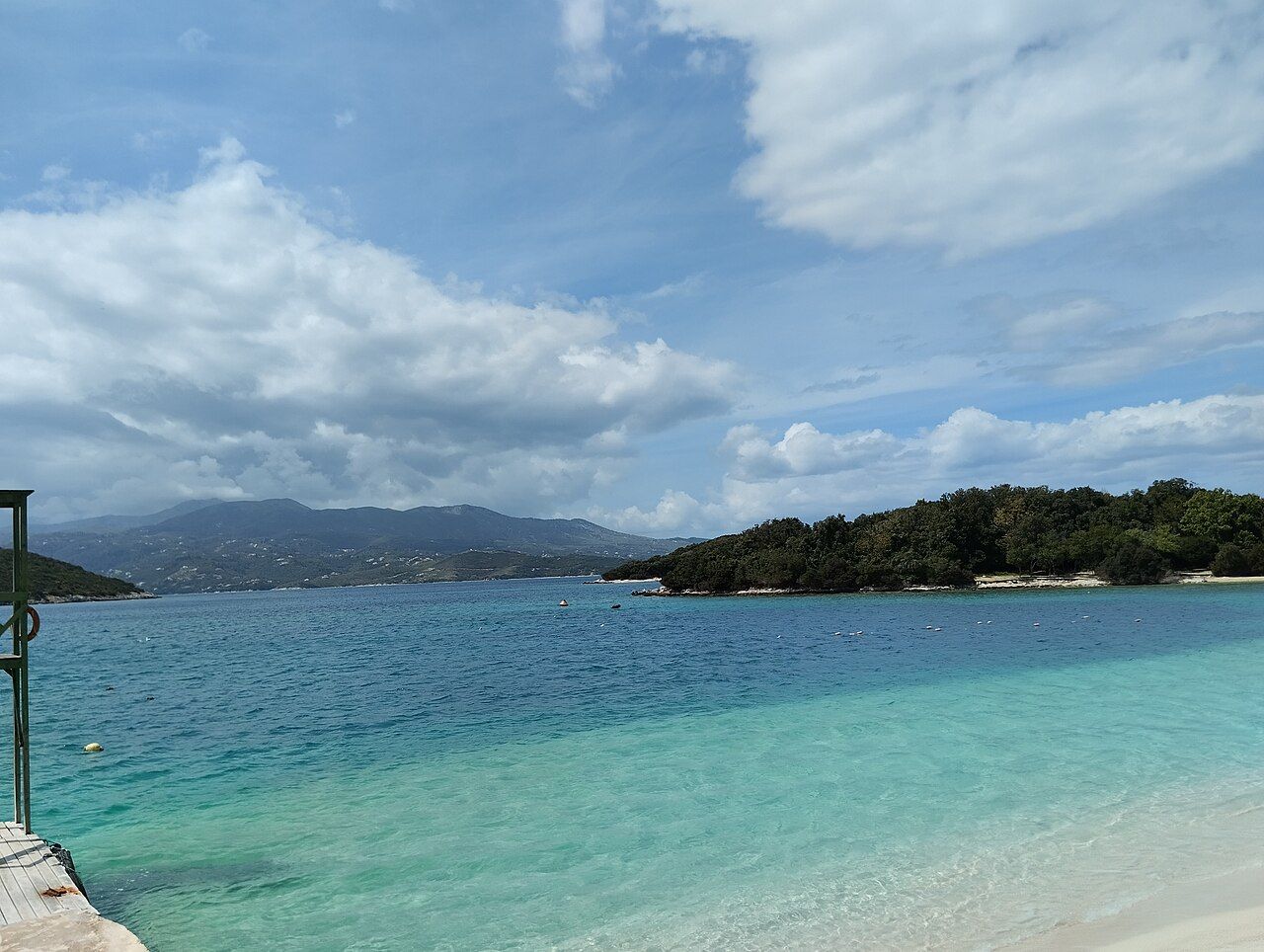
That clarity is the reason to come. With a mask you can watch fish over the sand and the sea grass in water only a metre or two deep. The rocky edges of the coves are the most interesting for snorkelling, with sea urchins in the cracks, so water shoes help both with the entry and with the wildlife.
- Sandy coves: gentle entry, warm shallows, good for children, busiest first.
- Pebble and rock: clearer water, fewer people, better snorkelling, harder underfoot.
- Points between bays: flat rocks for sitting, deeper water close in.
Swimming or paddling to the islands
The small islands off Ksamil are the picture everyone carries away: low humps of green with thin white edges, set in water that looks shallow enough to wade. In places it nearly is, but not all the way. The nearest islands are a short swim for a confident swimmer in calm weather, and many people cross by kayak or paddleboard, or on small boats that shuttle back and forth from the beaches in summer.
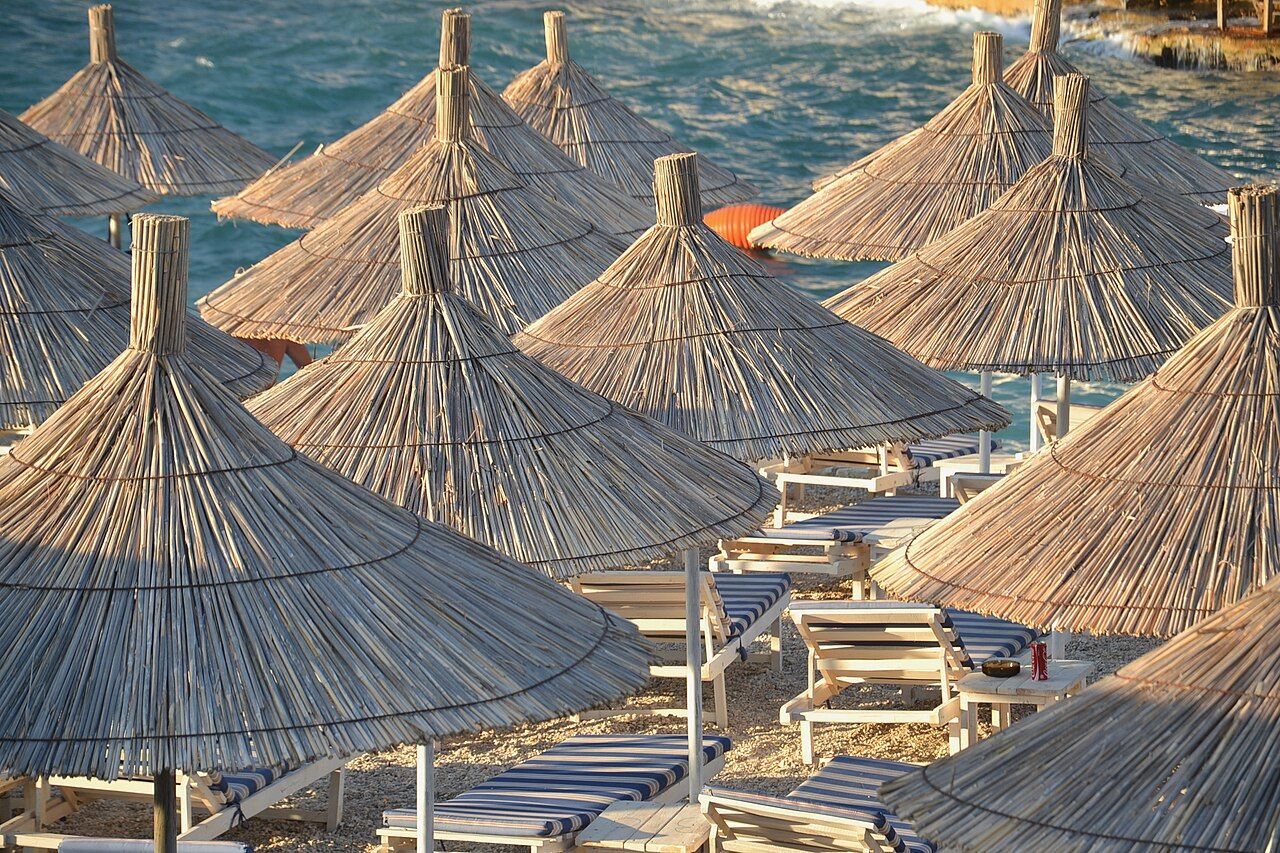
Treat the crossing with respect. The water deepens between the shore and the islands, wind can raise a chop in the afternoon, and there can be currents in the gaps. The bigger risk is boat traffic: in July and August small motorboats, pedal boats and water taxis cross the same water you are swimming in, and their drivers are not always watching for heads.
- Go in the morning, when the sea is usually at its flattest.
- Swim with someone, and wear a bright cap or tow a float so boats can see you.
- Stay close to the line of buoys where there is one, and keep clear of boat lanes.
- Turn back if the wind picks up; the return is always the harder half.
The islands themselves have rocky edges, small beaches and scrubby trees. In summer some of them have sunbeds and seasonal services, so do not expect wilderness; outside the high season they are quiet again.
Summer crowds and sunbeds
Ksamil grew quickly after the 1990s. What was a small farming village planted with olives became a resort strip of apartments and guesthouses, built fast and close to the water. The result is a busy, cheerful, somewhat crowded place in high season, and you should come knowing that.
Onward · Butrint & KsamilButrint, a city in the marshIn July and August most of the sandy coves are covered by rows of sunbeds and parasols, often packed tightly together. Many beaches are run by the businesses behind them, and a sunbed usually comes with a daily charge; prices vary from cove to cove and rise in the peak weeks. Free space exists, but it tends to be on the rockier stretches, or at the very edges of the bays.
Traffic is the other summer test. The road south from Sarandë is narrow in places, and in August it can slow to a crawl in the middle of the day. Parking near the beaches is limited. Buses run the coast road in season, and they avoid the parking problem entirely.
Knowing when to come, and how the coves work, makes the difference between a crowded day on a sunbed and a morning swim in near silence.
The quieter months
The best time for Ksamil is either side of the peak. In late May and June the sea has warmed enough for comfortable swimming, the days are long, and the coves are only partly set up for summer. September is often better still: the water is at its warmest after the summer, the crowds have thinned once the school holidays end, and the light turns soft in the evenings.
In these months you can walk the shore path from cove to cove, pick a flat rock, and have the water largely to yourself in the early morning. Some seasonal businesses close from October, and the island boats stop, but the swimming can stay good well into the autumn in a warm year.
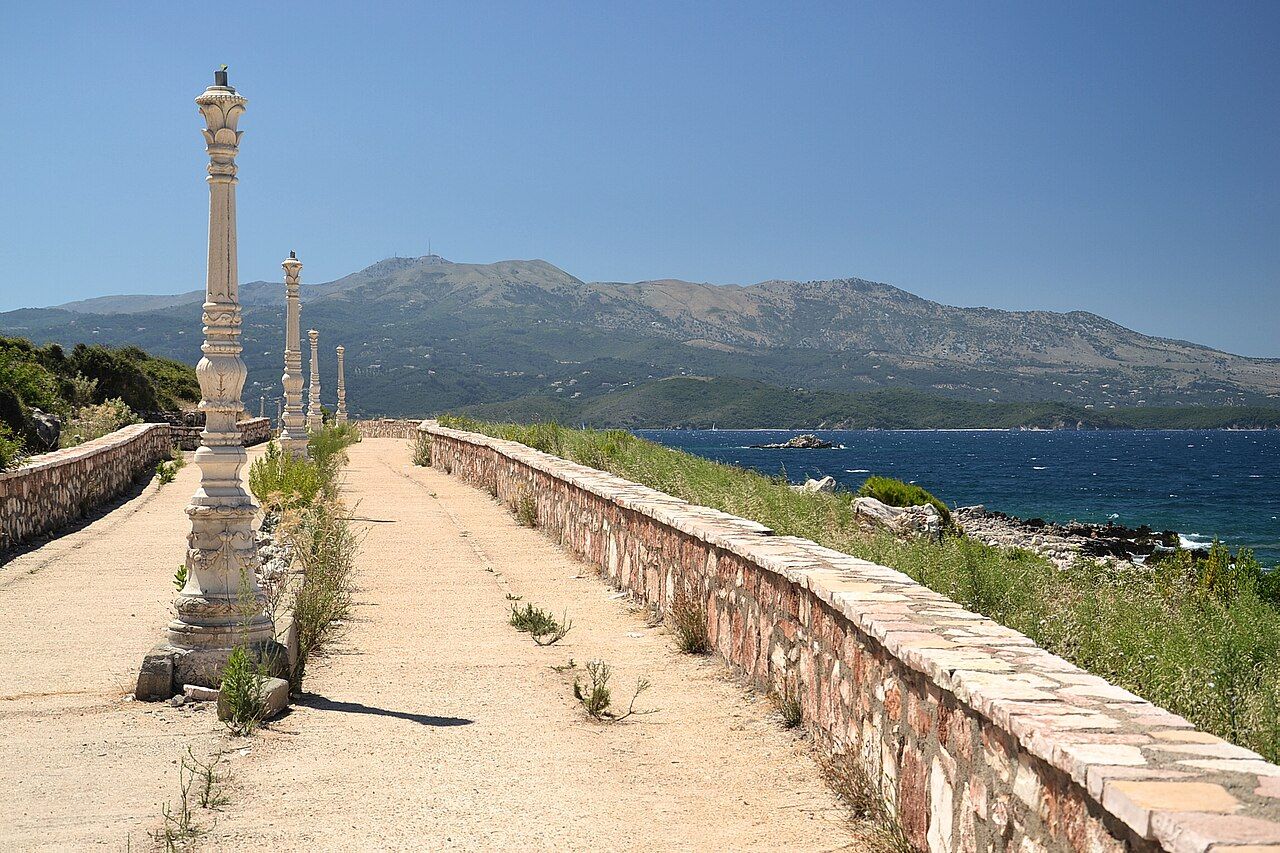
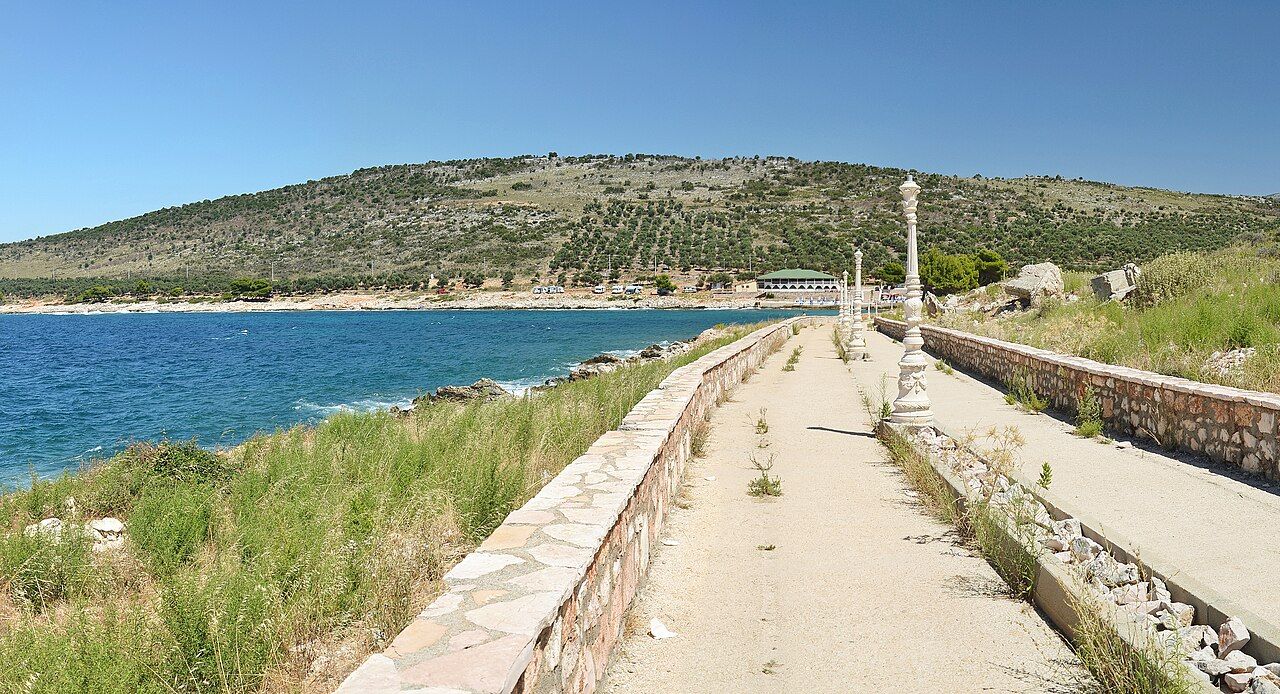
A walk along the northern edge of the village shows another side of the place: an old seafront walkway with ornate lamp posts, partly overgrown, running past rocky shore with Corfu across the water. It is rarely busy and makes a good evening stroll.
Ksamil, the lagoon and Butrint
Turn your back on the sea and you are only a few minutes from a very different shore. On the inland side of the village lies Lake Butrint, where rows of mussel farms on the lagoon stand in still, brackish water. The mussels end up on plates up and down the coast, and our page on food on the southern coast explains what to look for.
The ruins of Butrint are just a short drive further south, and the two make an easy day together: the archaeological site in the cooler morning, Ksamil's water in the afternoon heat. Coming from the north, you pass along the edge of the lagoon on the coast road; heading back, the bay of Sarandë opens up below you, with the seafront promenade lit along the water.
However you plan it, keep the basics in mind. Bring water and sun protection, because there is little natural shade on the coves. Bring cash for small purchases and sunbed charges. And if you can, choose the edges of the season, when Ksamil's clear water is as bright as ever and the coast feels like it belongs to the swimmers again.