
On the coastIn summer, eat late and lightly at midday, when the heat is strongest. Waterfront menus fill up at sunset in July and August; side streets are usually calmer.
Food on this coast follows the landscape. The sea gives fish, octopus and shellfish; the lagoon south of Sarandë gives mussels; the terraced hills give olives, citrus, herbs and honey; and the mountains behind the coast give lamb, cheese and the habit of slow, oven-baked dishes. Over centuries, Greek, Ottoman and Italian influences have all left something in the kitchen, but the cooking remains plainly Albanian: generous, unfussy and built around what is fresh.
You will not need a guidebook to eat well here. What helps is knowing the names of a few dishes, so that a menu written in Albanian becomes a list of good choices rather than a puzzle.
Fish and seafood from the coast
On the seafront in Sarandë and in the beach towns to the north, grilled fish is the obvious order. It is usually brought out whole, cooked simply over charcoal or on a griddle, and served with lemon, olive oil and perhaps a little garlic and parsley. Fish is often priced by weight, so it is worth asking how the price is worked out before you order. Sea bream and sea bass appear on most menus, alongside whatever the day's catch has brought in.
Octopus, squid and prawns are common too, grilled or fried, and a mixed seafood plate is a good way to try several things at once. As anywhere on the Mediterranean, what counts as local depends on the day and the season, so ask what is fresh.
Mussels from the Butrint lagoon
South of Sarandë, Lake Butrint is a shallow coastal lagoon joined to the sea by the Vivari channel. Its waters have been used for shellfish farming for decades, and rows of wooden platforms with hanging ropes still stand out on the surface. Our guide to the lagoon and its mussel farms explains how they work.
The mussels turn up all along this stretch of coast, especially around Ksamil, usually steamed with white wine, garlic and herbs, or in a tomato sauce, and sometimes baked or added to rice and pasta. They are among the most distinctive things you can eat here, because they come from water you can see from the table.
Byrek and the bakery
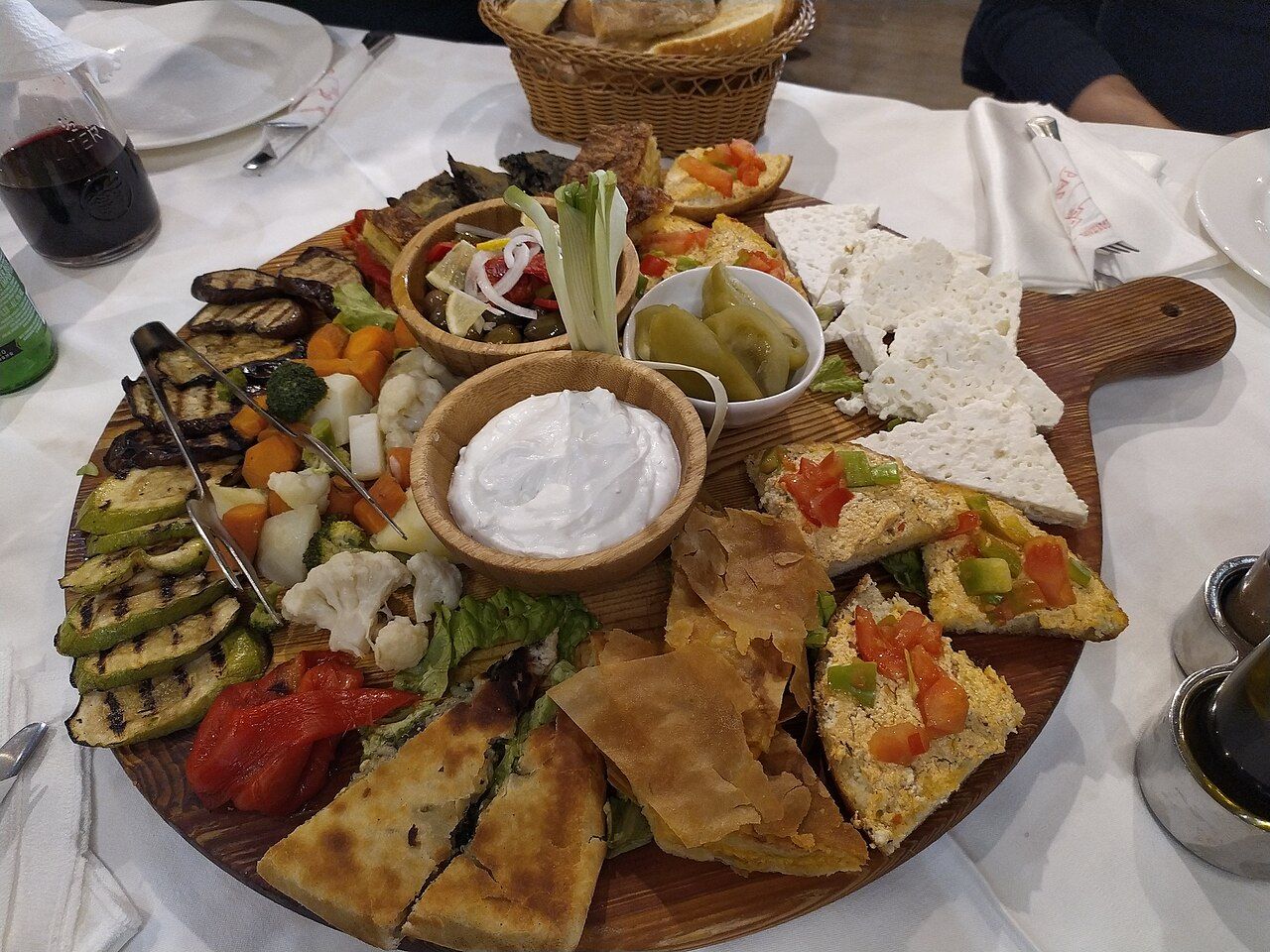
Every Albanian town has bakeries, and the one thing they all sell is byrek: a pie of thin filo pastry layered or rolled around a filling. The classic fillings are white cheese, spinach or other greens, minced meat, or onion and tomato. A slice of byrek with a glass of yoghurt or a coffee is a common breakfast, and it makes a cheap, filling lunch on a long day on the road.
Onward · SarandëThe long walk around Sarandë's bayBakeries open early and the best batches often go before noon. Byrek is usually sold by the piece or by weight, so you can point at what you want and try more than one kind.
Slow dishes from the hills
Inland cooking leans on the oven. Tavë kosi is the dish most Albanians would put forward as national: pieces of lamb baked with rice under a thick layer of yoghurt and egg, which sets into a soft, slightly tangy crust. It is more common in family kitchens and traditional restaurants than on beachfront menus, so look for it in the older parts of town and in hill places such as Gjirokastër.
Fërgesë is another to know. It is a rich, warm mix of peppers, tomatoes and cottage cheese, cooked together until soft and served with bread for scooping. Versions vary from family to family and from region to region, and some add meat or liver, but the base of peppers and fresh cheese is the constant.
Salads, olives, oil and honey
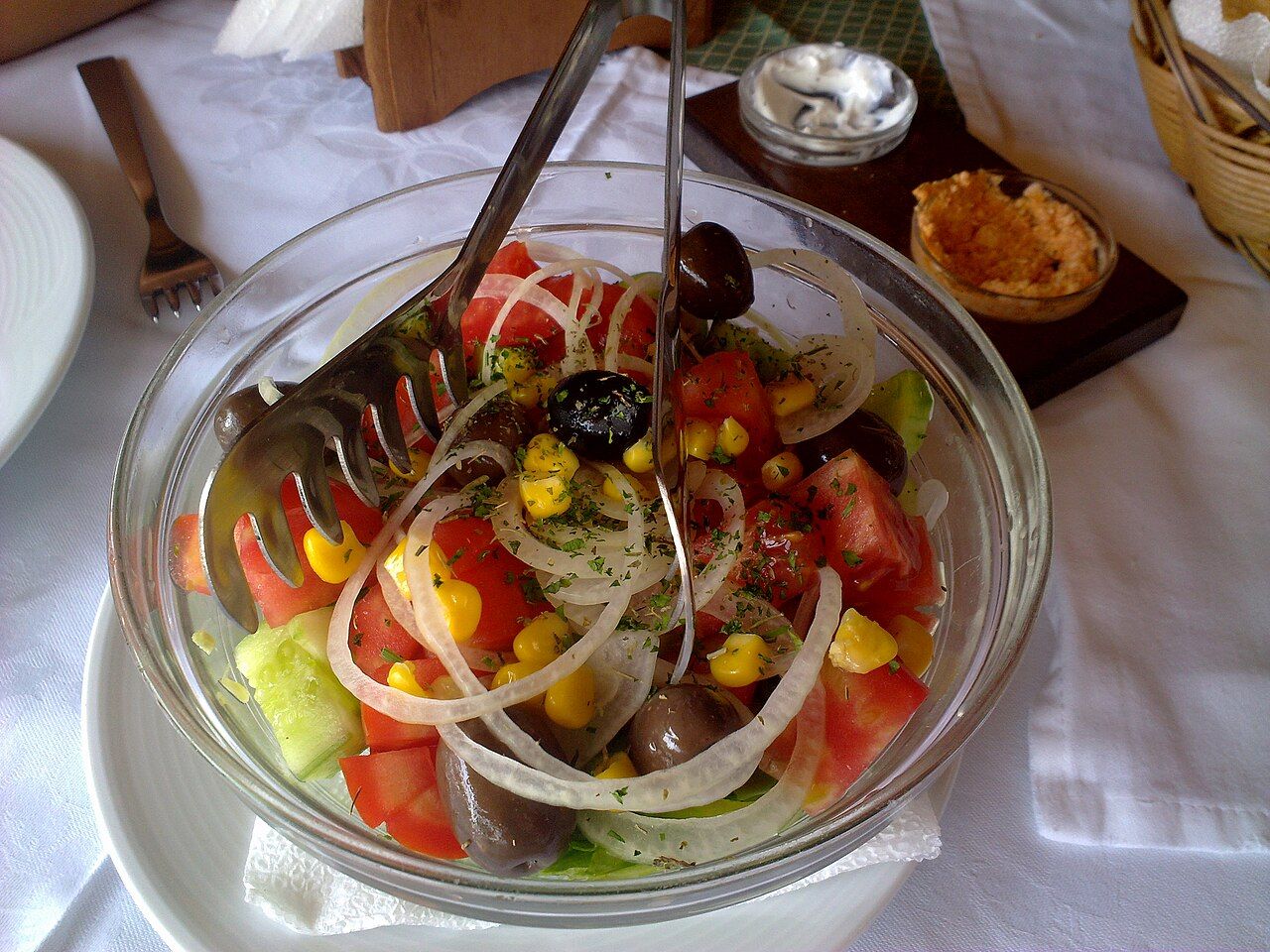
Almost every meal comes with a salad. The usual one is plain and fresh: tomato, cucumber, onion and olives, sometimes with white cheese, dressed at the table with olive oil and salt. In summer the tomatoes taste of the sun they grew in.
The olive trees you pass all along the coast are not decoration. Olive oil is pressed across the south, and olives cured at home or in small presses appear on most tables. Local honey, often from thyme, sage or chestnut, is sold at roadside stands and in markets, and it is worth bringing home in your luggage. Fresh fruit follows the season: figs, grapes, watermelon and citrus from the groves around Borsh and Himarë.
Raki, coffee and the end of a meal
Raki is the spirit of the south. Here it is usually distilled from grapes, clear and strong, and often homemade. It is offered as a welcome, drunk in small glasses with a few olives or a piece of cheese, and sometimes appears at the end of a meal as a gesture from the kitchen. Sip it slowly and drink water alongside.
Coffee is taken seriously and often: short, strong espresso in town, and Turkish-style coffee in more traditional places. A slow coffee on the seafront in the evening, during the xhiro (the evening stroll), is part of the rhythm of the day.
Prices and practicalities
Eating out on the Albanian coast is generally good value by Mediterranean standards, though prices on the busiest waterfronts in high summer are higher than in the side streets and villages. The lek is the currency; euros are widely quoted in tourist areas, and some places accept them, but the exchange rate offered can be poor. Cards are increasingly accepted in towns, though not everywhere, so carry some cash. Tipping is appreciated rather than expected. Fish is often sold by weight, so ask the price first.