
On the coastThe road climbs over the ridge behind Sarandë with bends and views back to the sea. Inland it is hotter in summer and shade is patchy, so carry water and a hat.
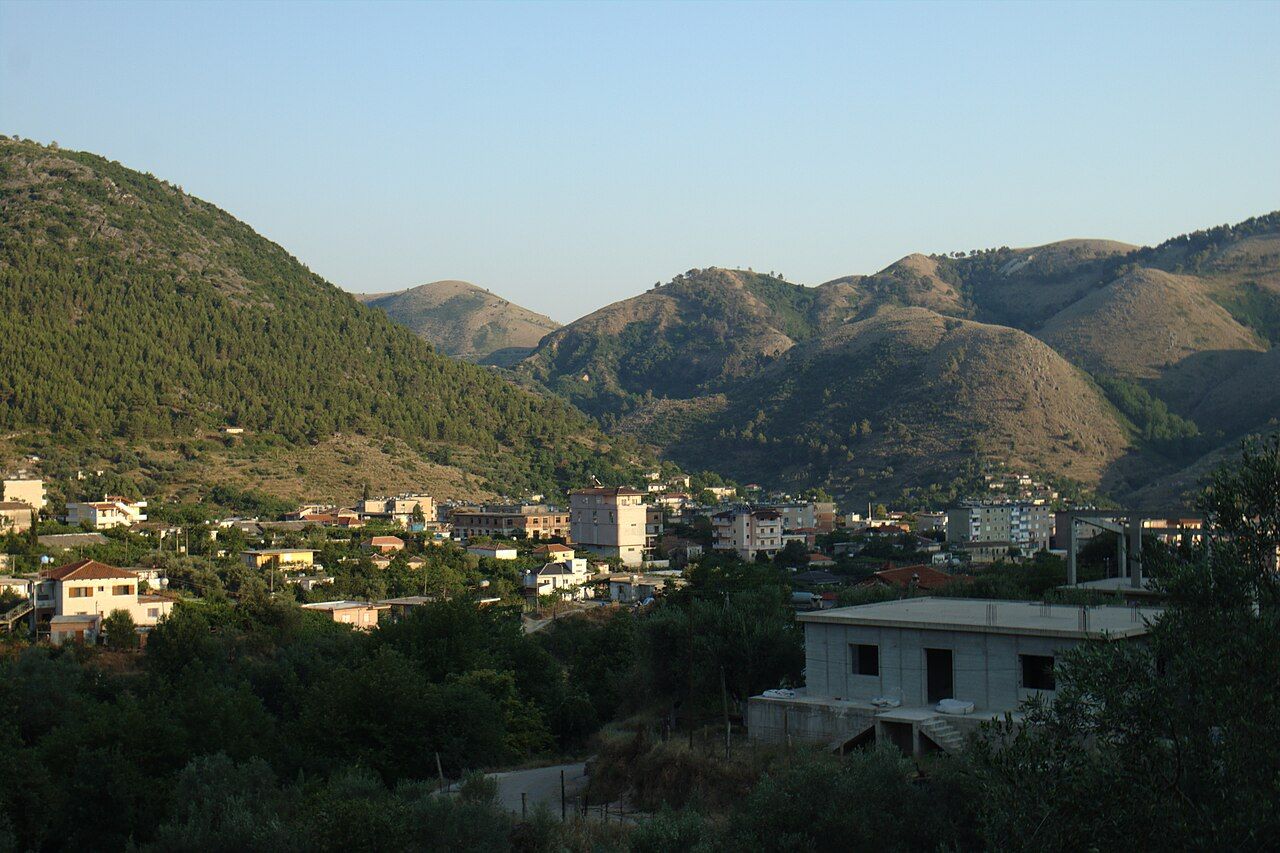
Behind Sarandë's ridge the land opens into a wider world of hills and valleys, and the first town you come to on one of the roads inland is Delvinë. It is small and unhurried, spread across slopes of olive groves and pine, with a modern centre below and older quarters climbing the hill. Few visitors stop here, which is part of its appeal.
Delvinë is not a museum town like Gjirokastër, and it does not try to be. What it offers is a sense of everyday life in the hills, an old mosque and castle ruins, and some of the best views back towards the coast. It makes a good half-day trip from Sarandë, or a pause on a longer drive inland.
The road over the ridge
From Sarandë the road climbs steeply out of town through a series of bends. As you rise, the bay opens out below, with Corfu across the strait, and at the top of the ridge you can usually pull over to look back at the coast. Then the road drops into the hills, passing fields, olive groves and small villages.
Along the way you pass the turn for Mesopotam, where the Byzantine church of St Nicholas stands in its valley. It is worth combining the two: the church takes an hour, and Delvinë is only a short drive further on. The road is generally good, though narrow in places, and in summer you will share it with trucks and buses.
A town in the hills
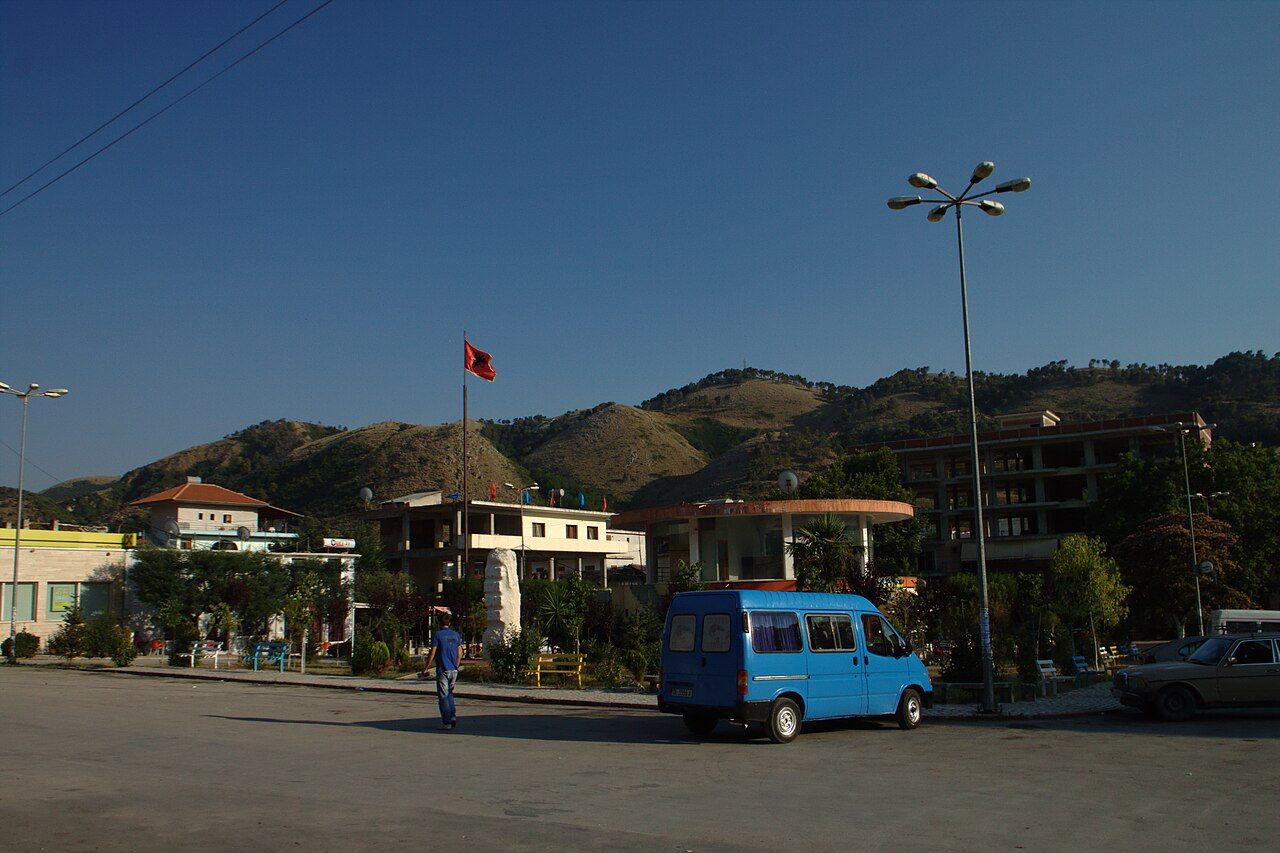
Delvinë sits in a bowl of hills, with the town spreading up the slopes from the main square. The centre is modern and modest, with low buildings, cafés and a square where people gather in the evening. Above it, the older quarters climb the hill among olive trees and cypresses, with stone walls and narrow lanes.
The town has a long history. It was an important Ottoman administrative centre, and for a time the seat of a sanjak, a district governor, which explains the old mosques and houses. Before that, the hills around it were part of ancient Epirus, and the wider area holds traces of many periods, from the classical to the medieval.
Like much of the far south, the Delvinë area has a mixed heritage. Albanian-speaking and Greek-speaking communities have lived in the town and the surrounding villages for generations, along with both Muslim and Orthodox Christian traditions. That mix shows in place names, churches and mosques, and in the languages you may hear. It is a subject people discuss with care, and visitors do well to listen more than they speak.
Onward · InlandThe Blue Eye, a spring with no known bottomThe old mosque and the castle
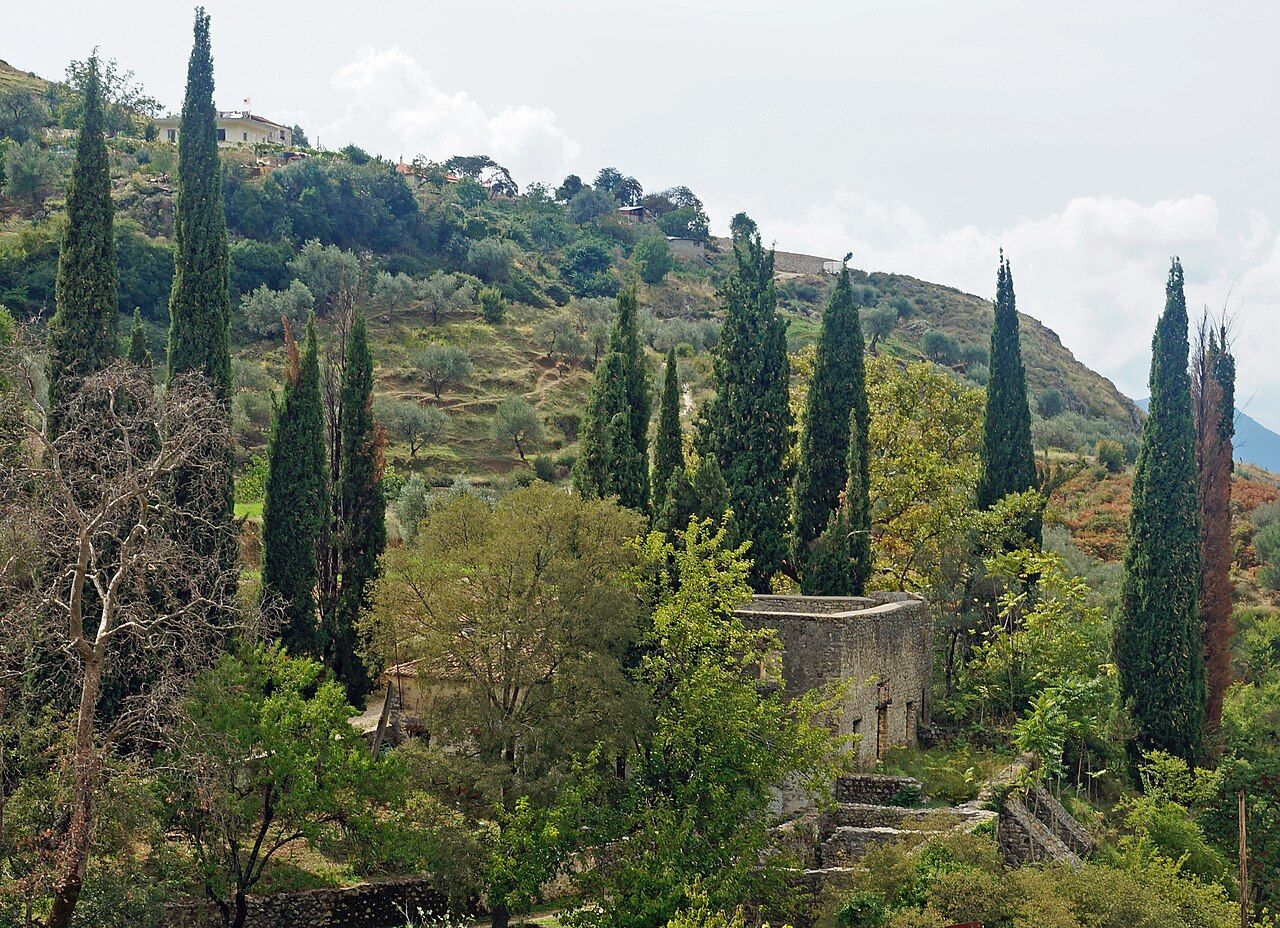
Delvinë's best-known monument is its old mosque, in the historic quarter above the centre, built in the Ottoman period of the sixteenth or seventeenth century. It sits among cypresses and stone ruins, and the setting is as much part of the visit as the building itself. Conservation work has taken place over the years, and access to the interior varies.
On the hill above the town lie the ruins of the castle. Little remains beyond sections of wall and foundations, but the climb is rewarded with views across Delvinë, the olive groves and the hills beyond. The paths can be rough and overgrown, so wear sturdy shoes and go in the cooler part of the day.
Olives and the countryside
The hills around Delvinë are covered in olive groves, some of them very old, with gnarled trunks and silver leaves. Olive oil from the south is excellent, and in late autumn you may see families harvesting, spreading nets beneath the trees. The countryside is also good for citrus, figs and walnuts, and roadside stalls sell local produce in season.
This is good walking country in spring and autumn, when the hills are green and the air is cool. Tracks lead out of town through the groves and up into the hills, with views back towards the coast. In summer, keep walks short and early; the inland heat builds quickly.
Combining Delvinë with other trips
Delvinë fits into several day trips. You can visit Mesopotam and Delvinë in a morning, then continue to the Blue Eye in the afternoon, or head on to Gjirokastër in the Drino valley. Each of these roads offers a different view of the hills behind the coast.
If the area's mixed heritage interests you, the coastal town of Himarë, further north along the Riviera, has its own Greek-speaking traditions and old quarter. Back in Sarandë, an evening on the seafront promenade rounds off the day.
Small practicalities
Delvinë is about 30 minutes from Sarandë by car. Minibuses run between the two towns. There are places to eat and drink in the centre, and the town is quieter than the coast, especially in the evenings.
Spring and autumn are the kindest seasons here. In April and May the hillsides are green and the roadside verges full of flowers; in October the light is soft and the olive harvest is close. High summer is hot inland, often hotter than the coast, and winter can bring heavy rain and cold nights to the hills.
Bring water, a hat and good shoes if you plan to climb to the castle or walk in the hills. Dress modestly if you visit the mosque or a church, and ask before photographing people. And take your time: the reward of Delvinë is in the slower pace and the views, not in a list of sights.