
On the coastThe road climbs over the ridge behind Sarandë on bends. The valley is shady and cooler than the coast, but the car park bakes at midday and fills fast in July and August.
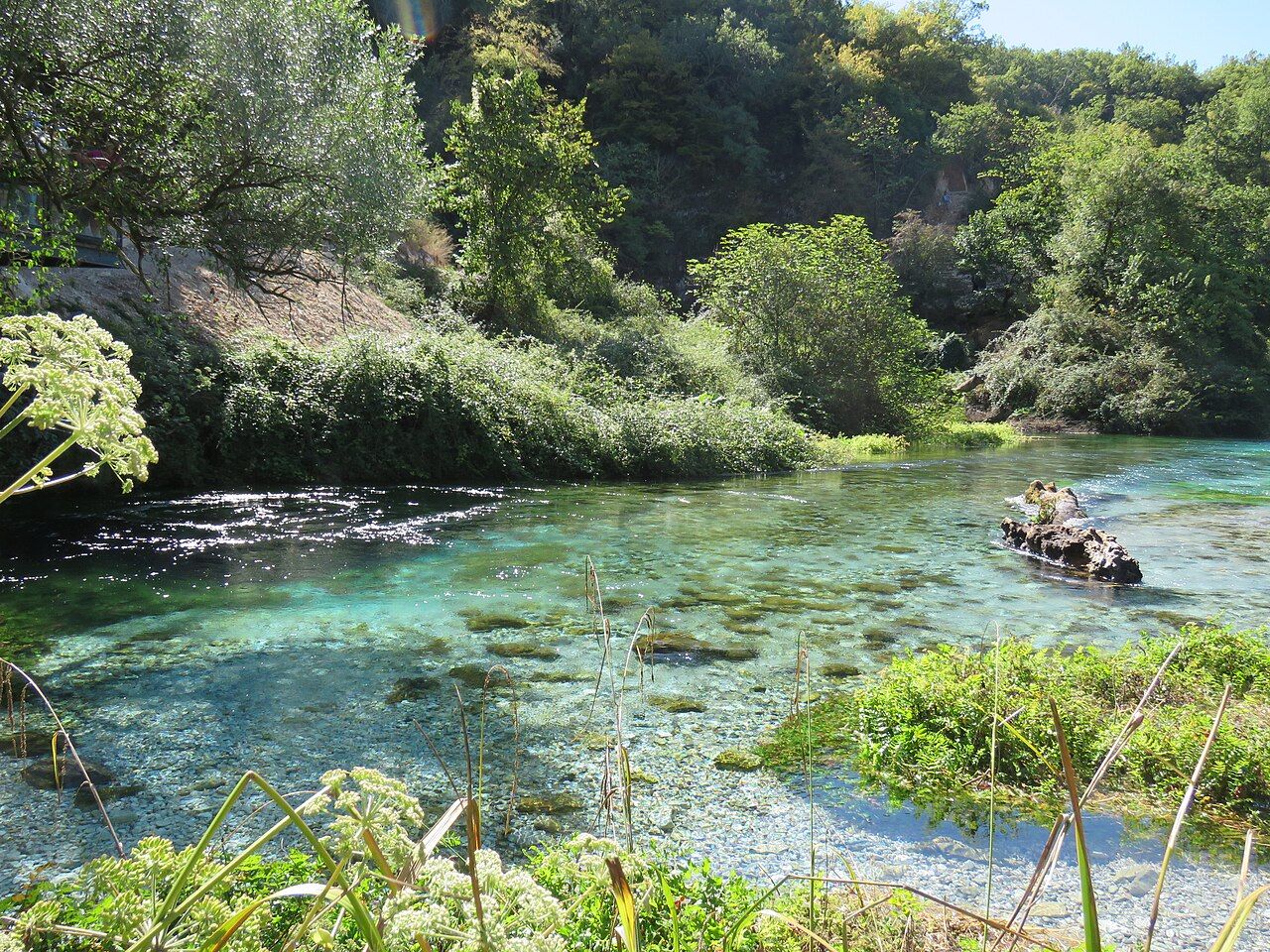
Half an hour inland from the beaches, the light changes. The road from Sarandë climbs the bare ridge behind the town, drops into a valley of plane trees and oaks, and somewhere near the village of Muzinë a narrow side road follows a river that is far too clear and far too cold for this climate. Its source is Syri i Kaltër, the Blue Eye: a karst spring where water pushes up from deep inside the limestone and spreads into a pool of colours that most photographs seem to exaggerate. They do not, much.
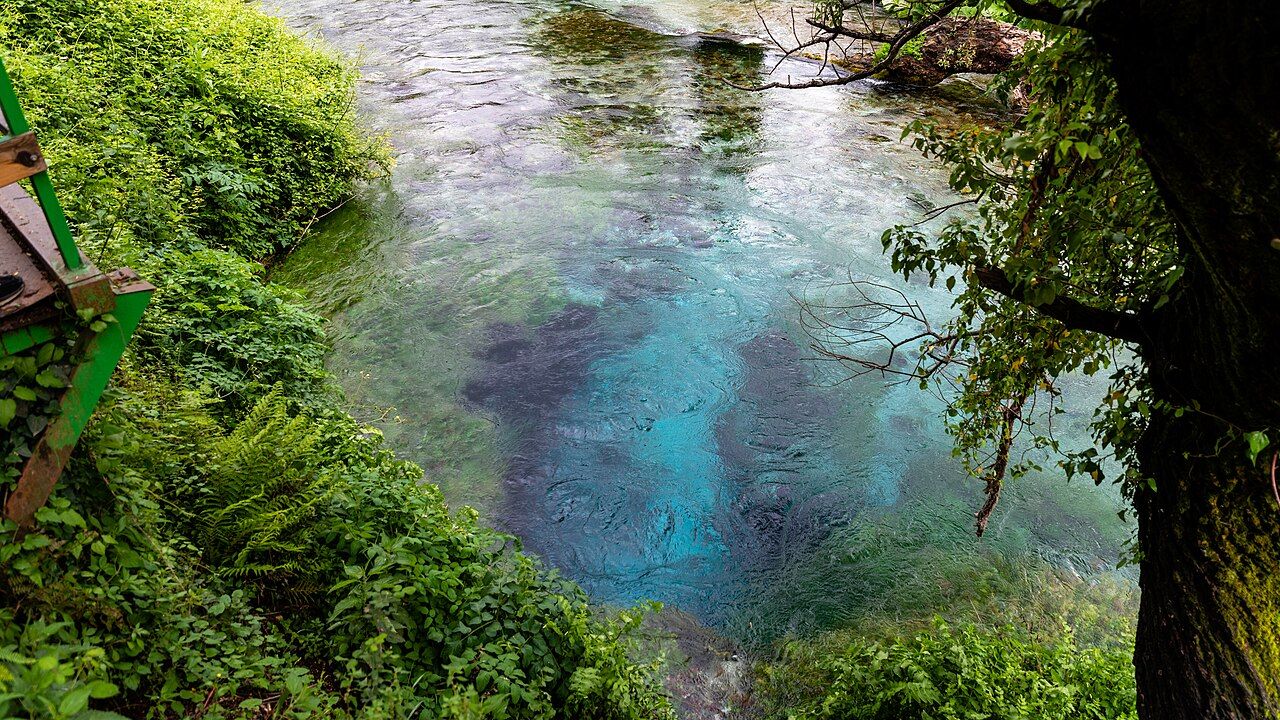
The centre of the pool is a dark, almost violet blue, ringed by turquoise, then a pale green where the water runs over gravel and weed. The surface moves constantly, bulging and swirling as the spring pushes up from below. It is one of the most visited natural sights in southern Albania, and it is easy to combine with a day inland, but it rewards a little planning.
What the Blue Eye is
The hills of southern Albania are largely limestone, and limestone dissolves. Over a very long time, rain and snowmelt have opened channels and caverns through the rock, and water travels underground for long distances before it finds a way out. At the Blue Eye it comes out with force, rising up a near-vertical shaft into the valley floor.
Nobody has measured the bottom. Divers have explored the shaft to more than 50 metres without reaching the end of it, and the colour you see in the middle of the pool is simply depth: a column of very clean water absorbing the warmer colours of the light until only blue is left. Around the edges, where the water is shallow, the same water looks almost colourless over the stones.
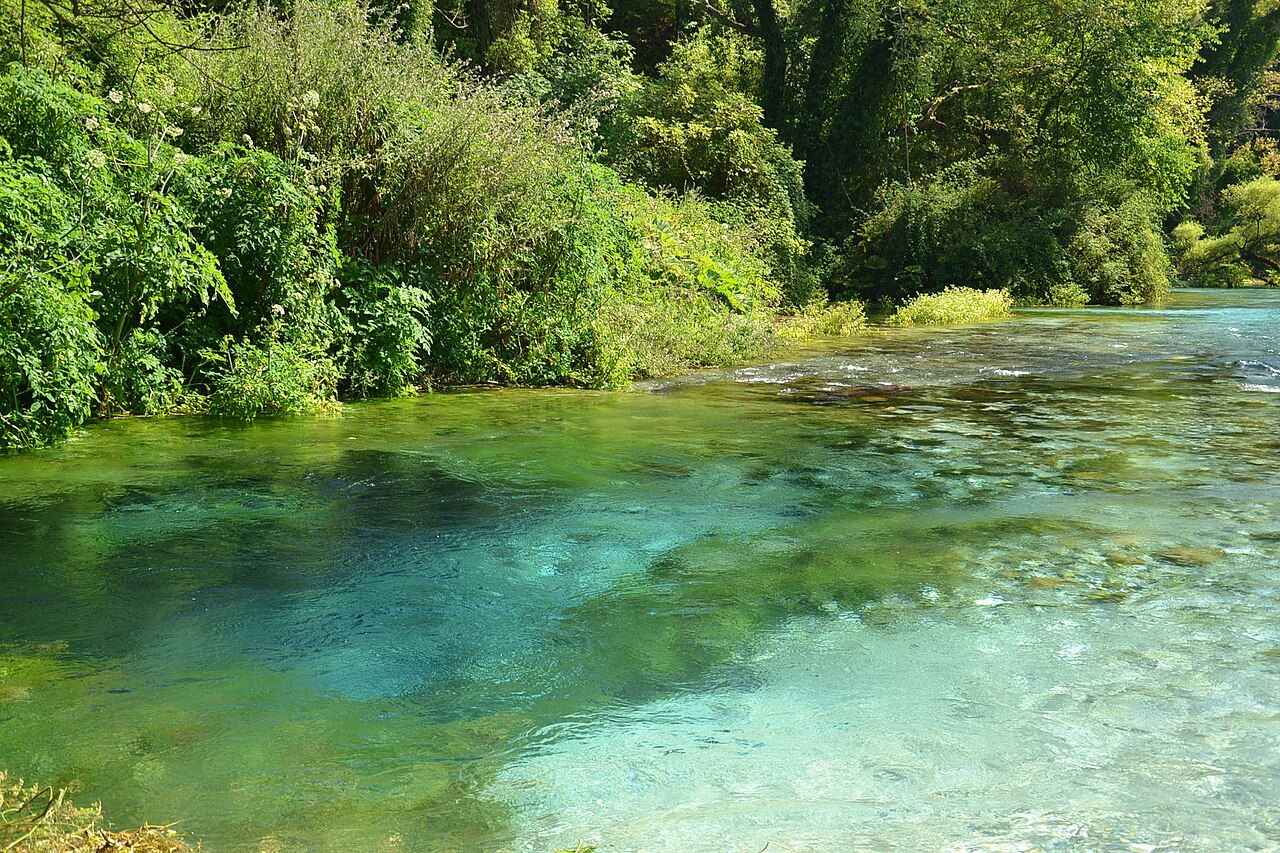
The water is cold all year, around 10 to 13 °C, whatever the weather on the coast. Step close on a hot August afternoon and you can feel the air cool over the surface. The spring feeds the Bistrica river, which carries the outflow away down the valley towards the coast, and the whole site is protected as a natural monument.
The path from the gate
Most visitors arrive by car, taxi, organised tour or a bus heading inland, and leave the main road for the side road that runs up the valley. Depending on where you are dropped or where you can park, you either drive most of the way and walk the last stretch, or walk a longer section along the river through the trees.
The path itself is easy and mostly level, shaded by tall trees and running beside the river, which is already an extraordinary colour long before you reach the source. Small channels and weirs split off from it, and in spring the banks are thick with fresh green growth. A platform near the top gives the classic view straight down into the eye of the spring.
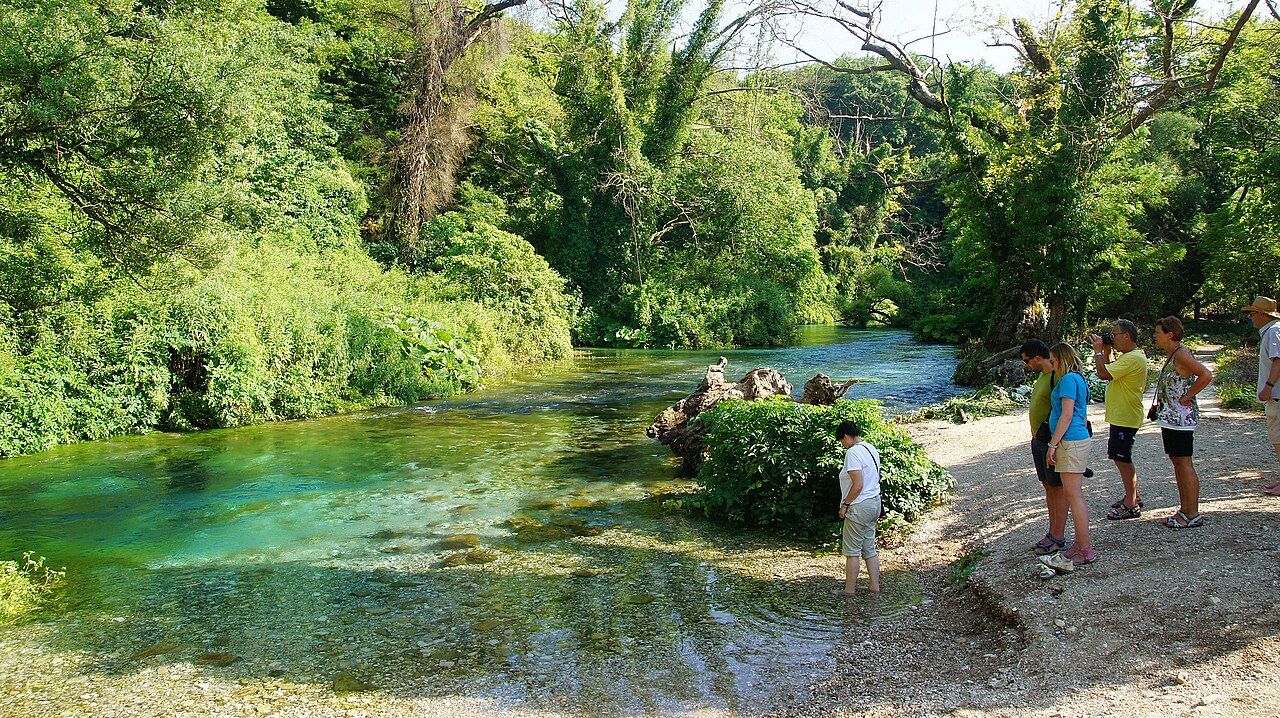
Wear shoes with some grip. The ground near the water can be damp and the stones are slippery, and children will want to get as close to the edge as they can. Keep to the paths and barriers that are in place; the banks are fragile and the plants along them are part of what makes the place so green.
No swimming, and why
Swimming and jumping into the spring are not allowed. You will see older pictures and videos of people leaping from the trees into the blue, and for a while it was common, but the rules were tightened to protect both the spring and the visitors. Plan on looking rather than swimming.
There are good reasons beyond the rules. The water is cold enough to shock a body that has been sitting in thirty-degree heat, and the upwelling at the centre is strong and unpredictable. The depth is unknown. It is not a pool for a casual dip, and the most beautiful part of the place, the deep blue centre, is precisely the part where trouble would be hardest to deal with.
Nobody has measured the bottom.
If you want water, save it for the coast. The beaches around Sarandë and along the Riviera are an hour away at most, and the sea there is warm from late spring to autumn. Paddling at the shallow edges downstream, where the river spreads over gravel, is something you may see people doing; it is cold enough that a minute is plenty.
Onward · InlandThe monastery church at MesopotamMonths that work best
The Blue Eye is at its busiest from late morning to mid-afternoon in July and August, when tour buses from Sarandë and the Riviera arrive close together. At those times the path is a slow procession and the viewing spots have queues. Early morning is the obvious answer: arrive soon after it opens and you have the light, the cool air and a fair chance of quiet.
Late afternoon is the other good window, once the day trips start heading back to the coast. In spring the valley is at its greenest and the river runs strongest after the winter rains. In autumn the trees turn, the crowds thin and the water looks, if anything, more intense against the brown and gold of the banks. Winter visits are possible, though facilities may be limited and the weather in the hills is less reliable.
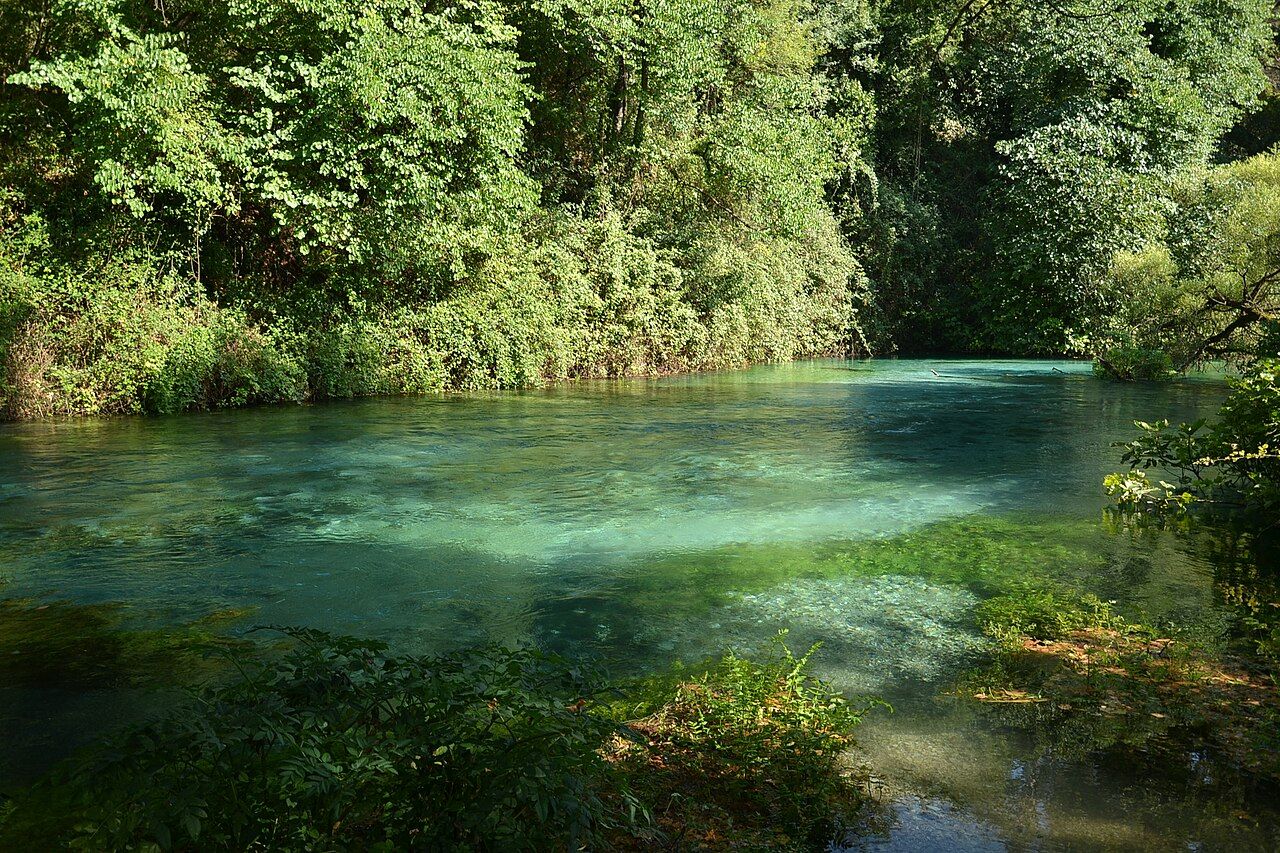
The colour also depends on the sky. Bright overhead sun gives the deepest blue in the centre and the most vivid turquoise around it, while a grey day turns everything a little greener. Heavy rain can cloud the river downstream for a while, though the spring itself usually stays clear.
Combining it with a day inland
The Blue Eye sits just off the road that runs from Sarandë over the hills to the Drino valley, which makes it a natural first stop on the way to the stone-roofed town of Gjirokastër, about an hour further on. Many people do exactly that: the spring in the morning before the crowds, Gjirokastër for lunch and the castle in the afternoon, and back to the coast in the evening.
Alternatively, stay closer. The small hill town of Delvinë and the Byzantine church at Mesopotam both lie in the hills between the coast and the spring, and either fits into a half day with the Blue Eye. If you are driving yourself, read our notes on driving the roads of the south first; the inland roads are good in places and slow in others, and summer traffic around the spring's turn-off can be heavy.
Bring water, a hat for the parking area and a light layer for the shade, which can feel surprisingly cool next to the river. There are places to eat and drink near the spring, but prices and opening times vary by season. Then go back to the coast for a swim, and the contrast between the cold, still blue of the spring and the warm open sea makes the day.