
On the coastThe beach town fills in July and August and parking near the bay is tight. The road to the old town is steep; walk up early or late, with water.
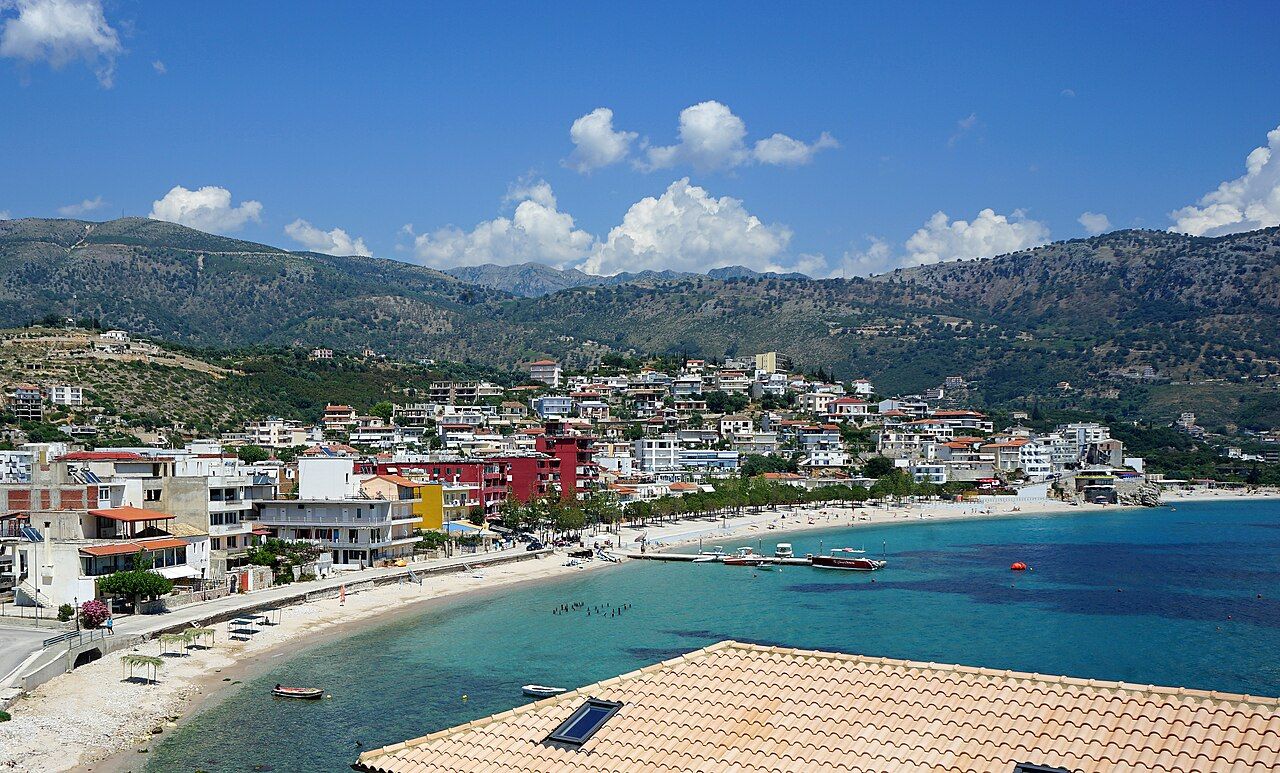
Himarë is the largest town on the Albanian Riviera between Sarandë and Vlorë, but it does not feel like one place. Down by the sea is the beach town, Spile, a crescent of white and pastel buildings around a bay with a promenade, a small port and a pebble beach. Up on the hill behind it, reached by a steep road, is the old town, known simply as Kalaja, the castle: a cluster of stone houses, lanes and churches inside the remains of fortified walls.
The two halves are different in mood and in age, and seeing both is the point of a visit. You swim and eat by the bay, and you climb to the old town for the history and the view.
The town by the bay
The modern town has grown fast in recent decades, and much of it is new. The promenade runs along the shore under a line of trees, with the beach below, mostly pebble, and small boats tied up at the end of the bay. In summer the water is calm and clear, and the beach is busy from mid-morning, with sunbeds and umbrellas set out along much of its length.
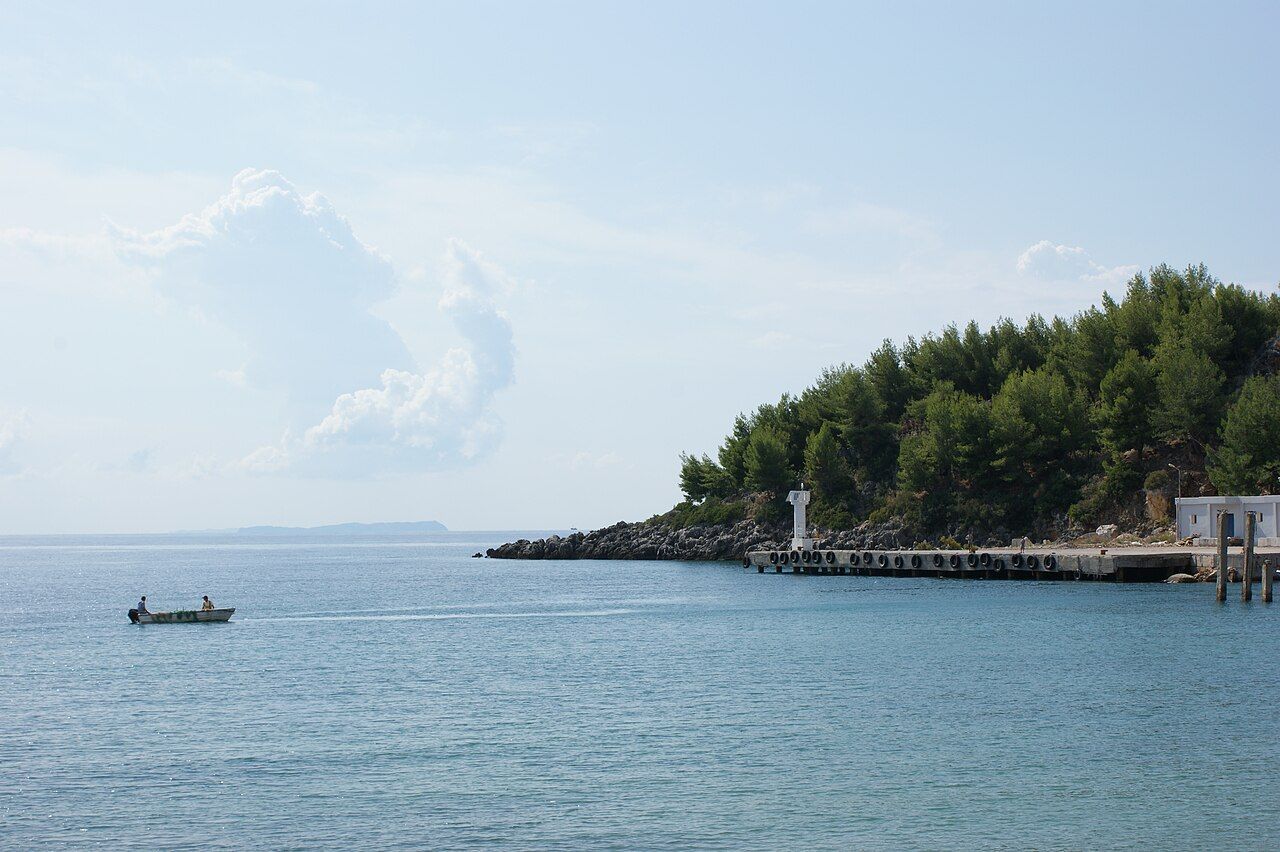
At the northern end of the bay is the port, a short concrete pier under a wooded headland. It is a working harbour for small fishing boats and occasional excursion craft rather than a marina, and on a quiet day it has an easy, unhurried feel.
Kalaja, the old town on the hill
The old town sits on a rocky hill a little inland, above the road. Its position tells you why it is there: high enough to see trouble coming from the sea, close enough to the coast to trade, and strong enough to defend. People have lived on this hill since ancient times, and the walls you see today, with their gates and patched stonework, were built and rebuilt through the Byzantine, Venetian and Ottoman periods.
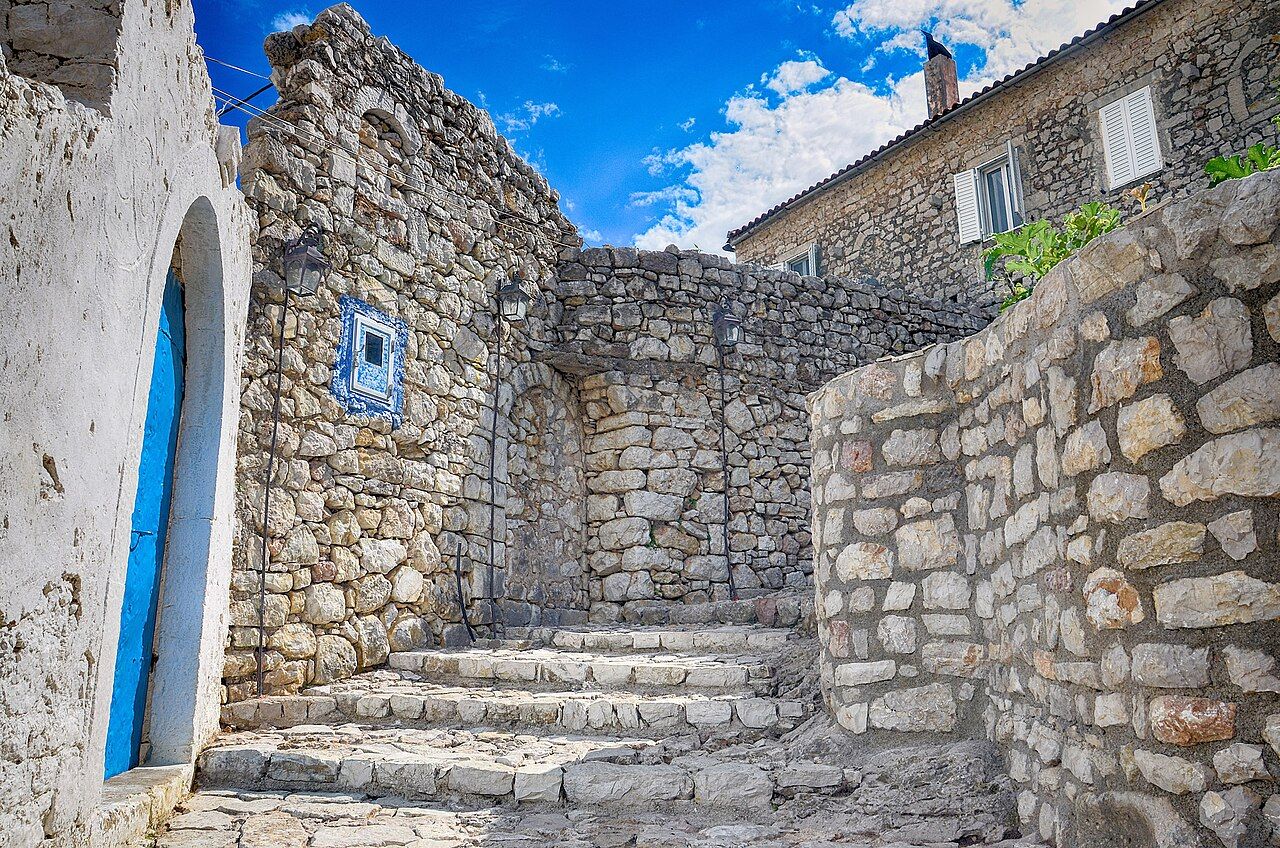
Inside, the lanes are narrow and stepped, paved with stones worn smooth by centuries of feet. The houses are built of the same grey and cream limestone as the hill itself, some restored with fresh shutters and new roofs, others half-ruined and open to the sky. Bright doors and small details catch the eye against the stone.
The old town has several churches, some of them very old, with frescoes and carved stone in places. Many are kept locked, but you may find one open, particularly around a feast day. If you do go in, cover your shoulders and knees and keep your voice low: these are places of worship for the people who live here, not museum pieces.
Onward · The RivieraPorto Palermo and Ali Pasha's fortressThe view alone makes the climb worth it. From the edges of the hill you look down over the bay and the new town, along the coast towards Porto Palermo in one direction and the mountains in the other, and out across the sea to the low shapes of the Greek islands on clear days.
A community with a long memory
Himarë has its own particular history. For centuries the area was home to a long-established Greek-speaking community, and Greek is still heard here alongside Albanian. The town and its villages were known for a fierce independence, negotiating special privileges with the powers that controlled the coast, from the Venetians to the Ottomans.
Questions of identity, language and property in the area have been sensitive in modern times, and people here hold strong views. As a visitor, the best approach is simple courtesy: listen more than you talk, do not assume anyone's identity, and enjoy the fact that you are in a place where layers of language, faith and loyalty have overlapped for a very long time.
Beaches near Himarë
The town beach is convenient, but the coast around Himarë has several smaller beaches worth seeking out. Potami lies just south of the main bay, and Llamani a little further on. These are pebble coves in the usual Riviera style, with clear water and a slightly calmer feel than the town beach, though in high summer they fill up too.
Some of the coves along this stretch are reached only on foot or by boat. Ask locally for current access, and remember that conditions change from year to year as roads are improved and new building goes up.
Getting there and practical sense
Himarë is about an hour and a half north of Sarandë on the SH8, the coast road towards Vlorë. The drive is twisting and slow in places, particularly in summer traffic; see our notes on driving the coast road for advice on fuel, parking and the busy weeks. Buses run along the coast.
- Parking: space near the bay is tight in July and August; arrive early or park further out and walk.
- The climb: the road up to the old town is steep and exposed. Drive up, or walk early in the morning or late in the afternoon.
- Clothing: bring something to cover your shoulders if you hope to enter a church.
When to come and where next
May, June, September and early October are the best months. The sea is warm enough for swimming from June, the old town is pleasant to walk in the cooler hours, and the bay is calm and uncrowded. In July and August the beach town is lively and busy, and the heat makes the climb to Kalaja a morning or evening job.
Himarë sits well in the middle of a Riviera trip. To the south lie the fortress at Porto Palermo and the long beach at Borsh. To the north the road continues to the white-pebble beaches of Dhërmi and Jale and then climbs over the mountains by the Llogara Pass. Whichever way you head, the hill of Kalaja is a good place to start, with the whole coast laid out below you.