
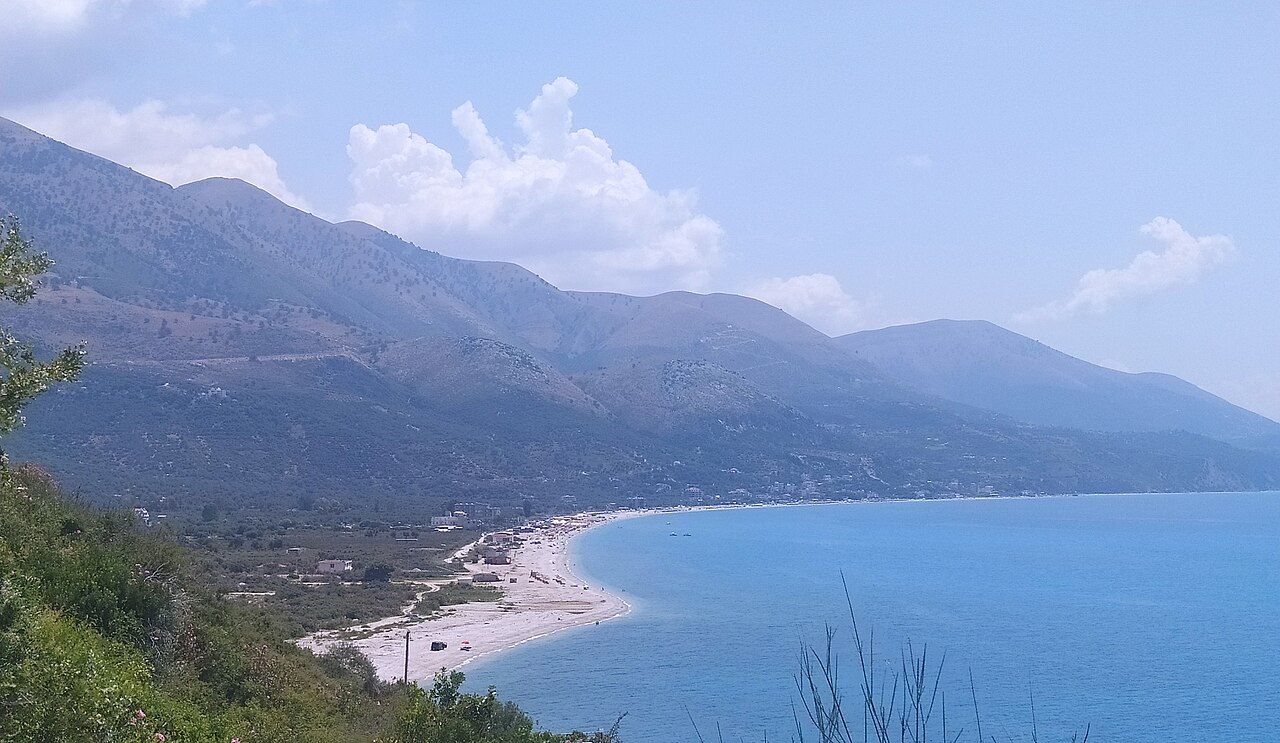
On the coastWide beach, so space is easy even in August, but shade is scarce. Sunbeds cluster near the road; walk further for quiet, and watch the sea when the wind rises.
Most beaches on the Albanian Riviera are coves: a bite of pebble between two headlands, filled from end to end in summer. Borsh is different. Here the mountains step back from the sea, and a broad, gently curving bay holds a beach that runs for several kilometres. It is one of the longest on the whole coast, and even in the busiest weeks of August there is room to spread out.
Behind the beach, terraces of olive and citrus climb the lower slopes, and higher up, on a rocky spur above the village, stand the ruins of Borsh castle. It is a place of space and light rather than drama, and that is exactly what makes it worth the drive.
Getting there along the coast
Borsh is about 50 minutes north of Sarandë on the SH8, the coast road that runs towards Vlorë. The road climbs out of town, passes the terraced village of Lukovë high above the sea, and winds on along steep slopes before the view suddenly opens and you see the long pale line of the beach below.
The best first view is from the road on the hill south of the bay, near the village of Qeparo. From there you can take in the whole arc of the shore, the green belt of trees behind it and the bare grey mountains above. Pull over only where there is a proper lay-by: the road is narrow, and traffic does not expect you to stop.
The beach itself
The beach is mostly pebble, with stretches of coarse sand and smaller stones, and it shelves fairly quickly into clear water. Because the bay is open to the west, the sea can be flat in the morning and lively by mid-afternoon when the wind rises. On calm days the water is very clear, and the colour shifts from pale green at the edge to deep blue further out.
Facilities are concentrated where the road meets the shore. Here you find sunbeds and umbrellas in summer, rented by the day, along with places to eat and park. Prices vary and change from season to season, so ask before you sit down. Walk a little way in either direction and the sunbeds thin out, until you are on open stones with only a few other families and the sound of the water.
- Shade: there is little natural shade on the beach itself, so bring an umbrella or rent one.
- Shoes: water shoes make getting in and out much easier on the pebbles.
- Space: the further you walk from the road, the quieter it gets.
Olives, citrus and springs
What gives Borsh its character is not only the sea but the land behind it. The lower slopes are cut into terraces, many of them very old, planted with olive trees and with groves of oranges and lemons. In spring the citrus blossom scents the air along the road, and in winter the trees are heavy with fruit.
The valley is well watered. Springs rise on the hillside, and a stream runs down through the village towards the sea, feeding the groves on the way. That water is the reason people have lived here for so long: on a dry, rocky coast, a reliable spring was worth defending.
You will see olive oil and citrus sold along the coast road in season, often by the growers themselves. Local olive oil is one of the best things to take home from this coast; for more on what to look for, see our notes on eating on the southern coast.
Onward · The RivieraPorto Palermo and Ali Pasha's fortressBorsh castle on the hill
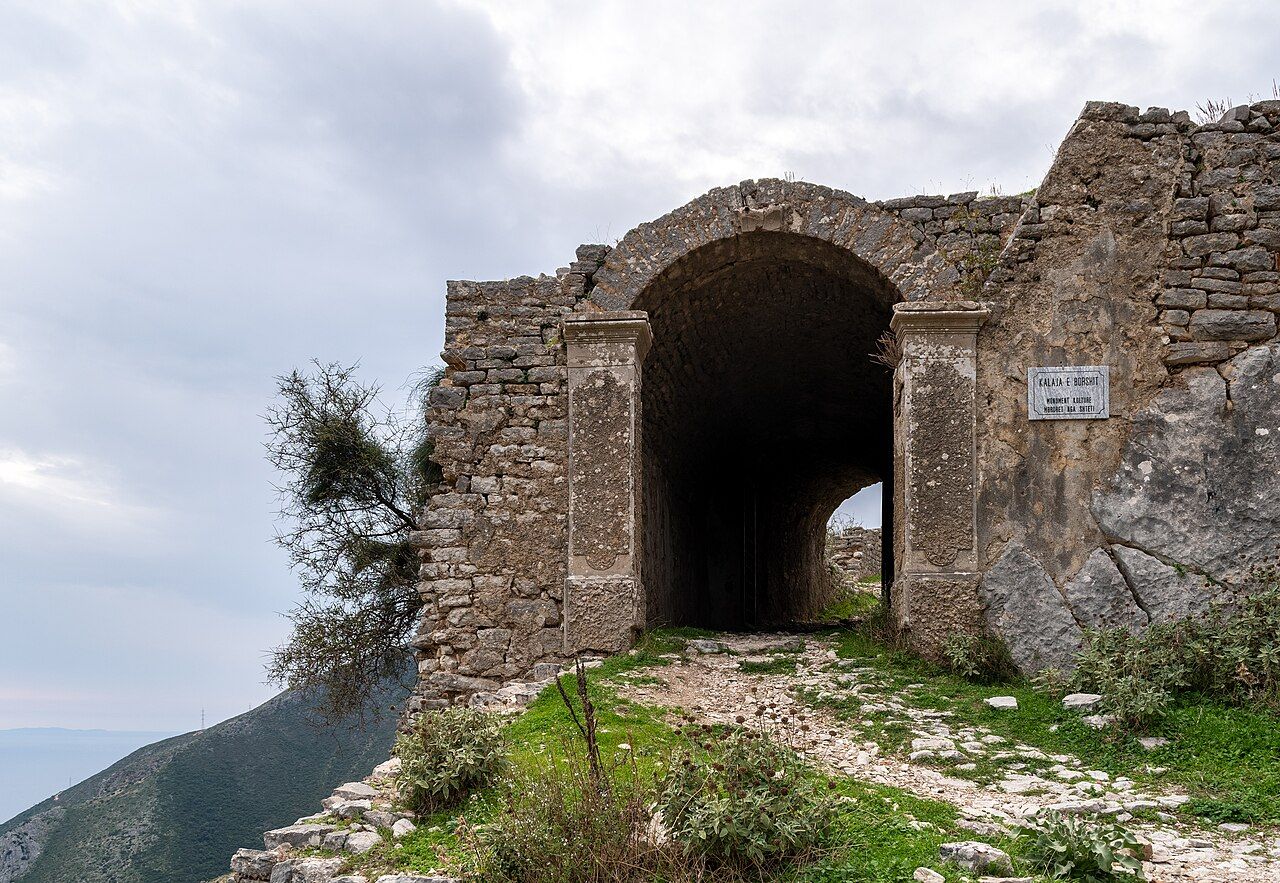
Above the village, on a steep spur where the valley narrows, stand the ruins of Borsh castle, also known as Sopot castle. The site was fortified long before the stone you see today; the walls show several periods of building and repair, and the castle passed through many hands over the centuries, ending up under Ottoman control.
What survives is a long circuit of walls following the crest of the hill, a fine arched gateway built of dressed stone, and inside an open, rocky enclosure overgrown with scrub. A plaque by the gate marks it as a protected cultural monument. There is little interpretation on site and no formal ticket office, so treat it as a ruin to explore rather than a museum, and watch your footing.
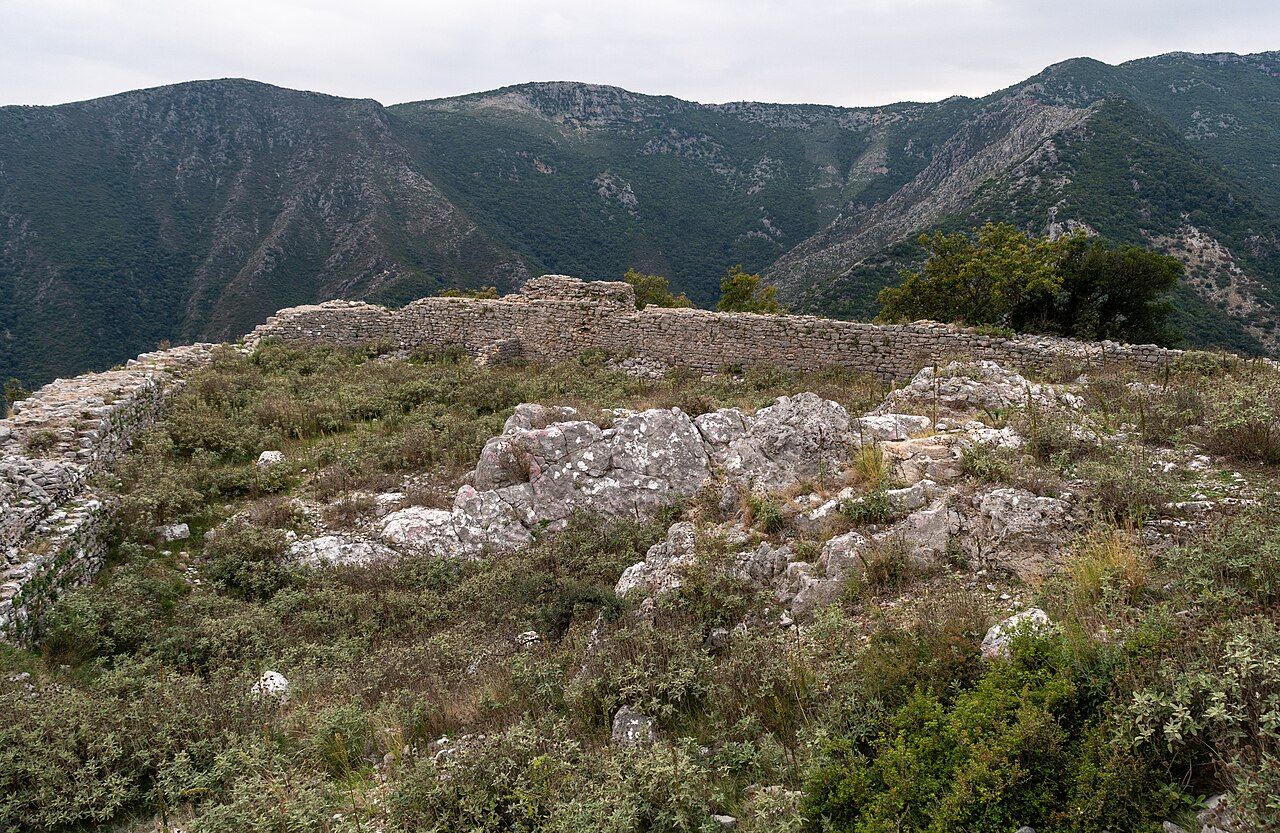
The path up is steep and stony. Ask in the village for the best way, wear proper shoes, and go in the morning or late afternoon: there is no shade on the climb and nothing to drink at the top. Your reward is the view. On one side the mountains rise in folds of green and grey; on the other the whole beach lies spread out below, with the sea beyond.
Kinder months
July and August are hot and busy, though the length of the beach means it never feels as packed as the smaller coves further north. The road gets crowded too, particularly at weekends and around the middle of the day.
The best months are May, June and September. The sea is usually warm enough to swim from June, the light is softer, the groves are green, and there is plenty of room on the stones. In October the beach facilities start to close, but the water often stays mild and the walk up to the castle is far more comfortable in the cooler air.
Combining Borsh with the rest of the coast
Borsh fits naturally into a day on the Riviera. From here the road climbs over the next headland and drops to the bay of Porto Palermo, with its small fortress on a peninsula, and then continues to Himarë. If you would rather stay close to Sarandë, the smaller coves around Lukovë and Bunec make a quieter half-day.
Wherever you go, give yourself time. The pleasure of Borsh is unhurried: a long swim, a walk along the shore, an afternoon under the olives, and the slow drive back south as the light turns gold over the sea.