
On the coastFill the tank before the climb. Summer traffic is slow on the hairpins, fog and grazing animals can appear without warning, and the top is often far cooler than the beaches below.
For most of its length the road north from Sarandë keeps the sea in sight. It runs above Lukovë, drops to Borsh, bends round Porto Palermo and Himarë, and threads between the villages above Dhërmi. Then, just past Dhërmi, it does something different. It turns its back on the water and starts to climb, switchback after switchback, up the bare face of the Ceraunian Mountains until the beaches below look like chalk marks on a blue page. At the top, about 1,000 metres above the sea, it slips through a saddle in the ridge and drops through cool pine forest towards Orikum and the Bay of Vlorë.
That saddle is the Llogara Pass, Qafa e Llogarasë in Albanian, and for many visitors it is the most memorable stretch of road in the south. It is the gate between two quite different coasts: the open Ionian Riviera on one side and the long, sheltered bay of Vlorë on the other. It also offers some of the widest views anywhere in Albania, a protected forest of black pine and fir, and air that can feel a season apart from the beach you left an hour earlier.
A road with a view on every bend
The SH8 is the spine of the Riviera, and the Llogara section is its most dramatic piece of engineering. On the coast side the road gains most of its height in a short distance, folding back on itself in a long ladder of hairpins cut into pale limestone. There is little vegetation on this face, only scrub, scattered rock and the occasional stunted tree, so nothing blocks the view. Each bend opens a new frame: the curve of the bay at Dhërmi, the long white beach running north towards Palasë, the headlands stepping away south towards Himarë, and beyond them the open sea fading into haze.
On a clear day you can see far out across the Ionian, with the dark outline of islands on the horizon. On a hazy summer afternoon the sea and the sky melt into one pale blue, and the coast seems to float. Both are worth the climb. Early morning and the last hour or two before sunset usually give the sharpest light and the softest colours; at midday the glare can flatten everything.
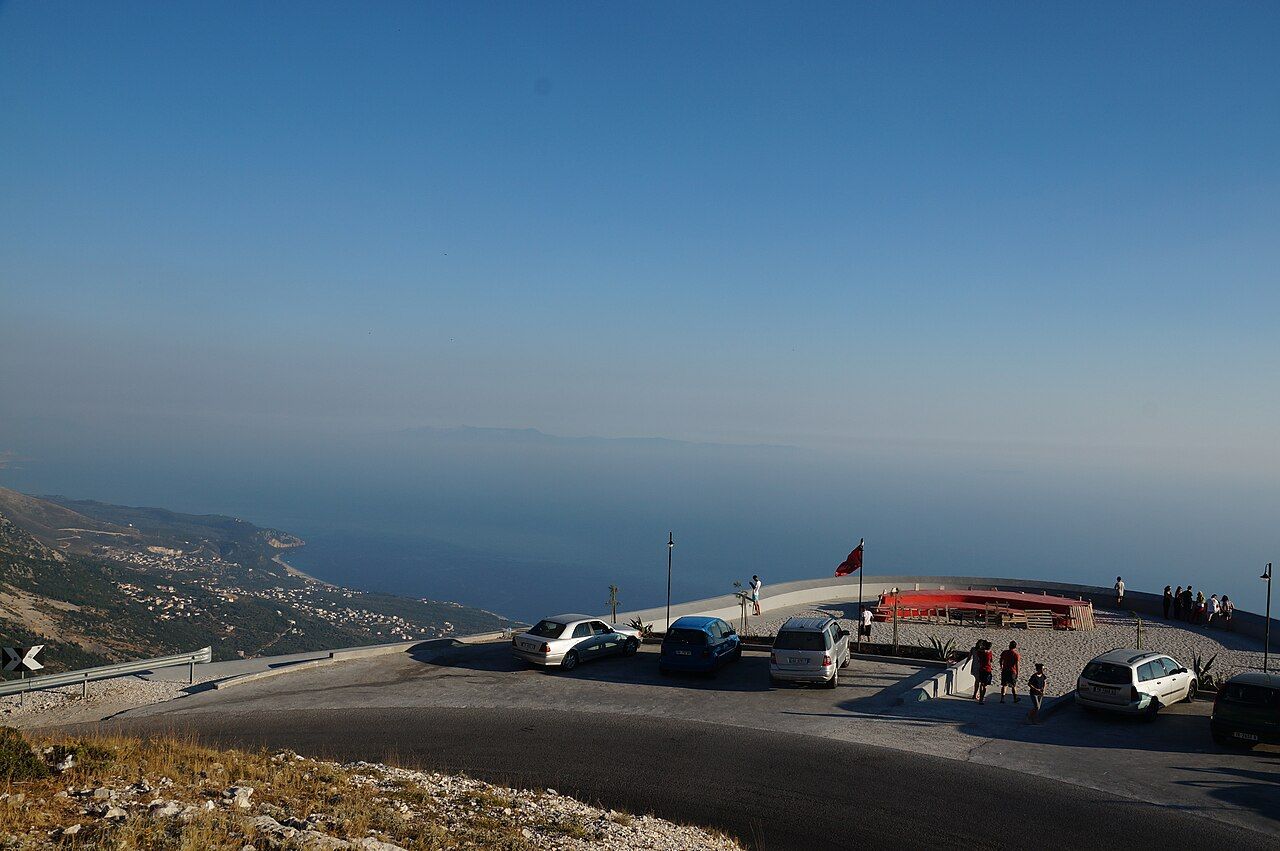
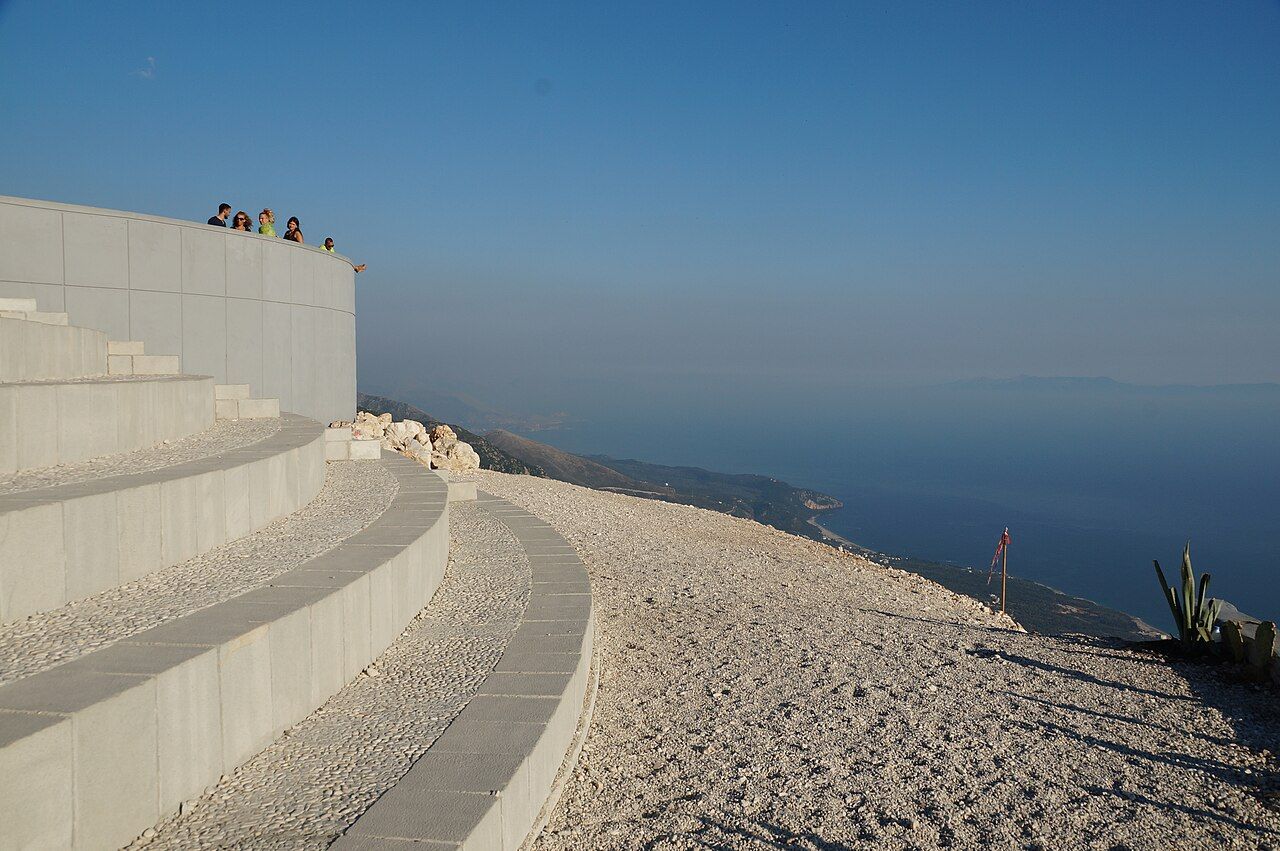
Several pull-outs and viewing areas sit along the upper bends, some with low walls and terraces built for people to stand and look. Use them, and only them. Stopping on a hairpin to take a photo is how most of the near misses on this road happen. Pull in fully, switch on your hazard lights if you need to, and keep an eye on children and dogs near the edge, where the drop is steep and the barriers are not continuous.
Into the forest at the top
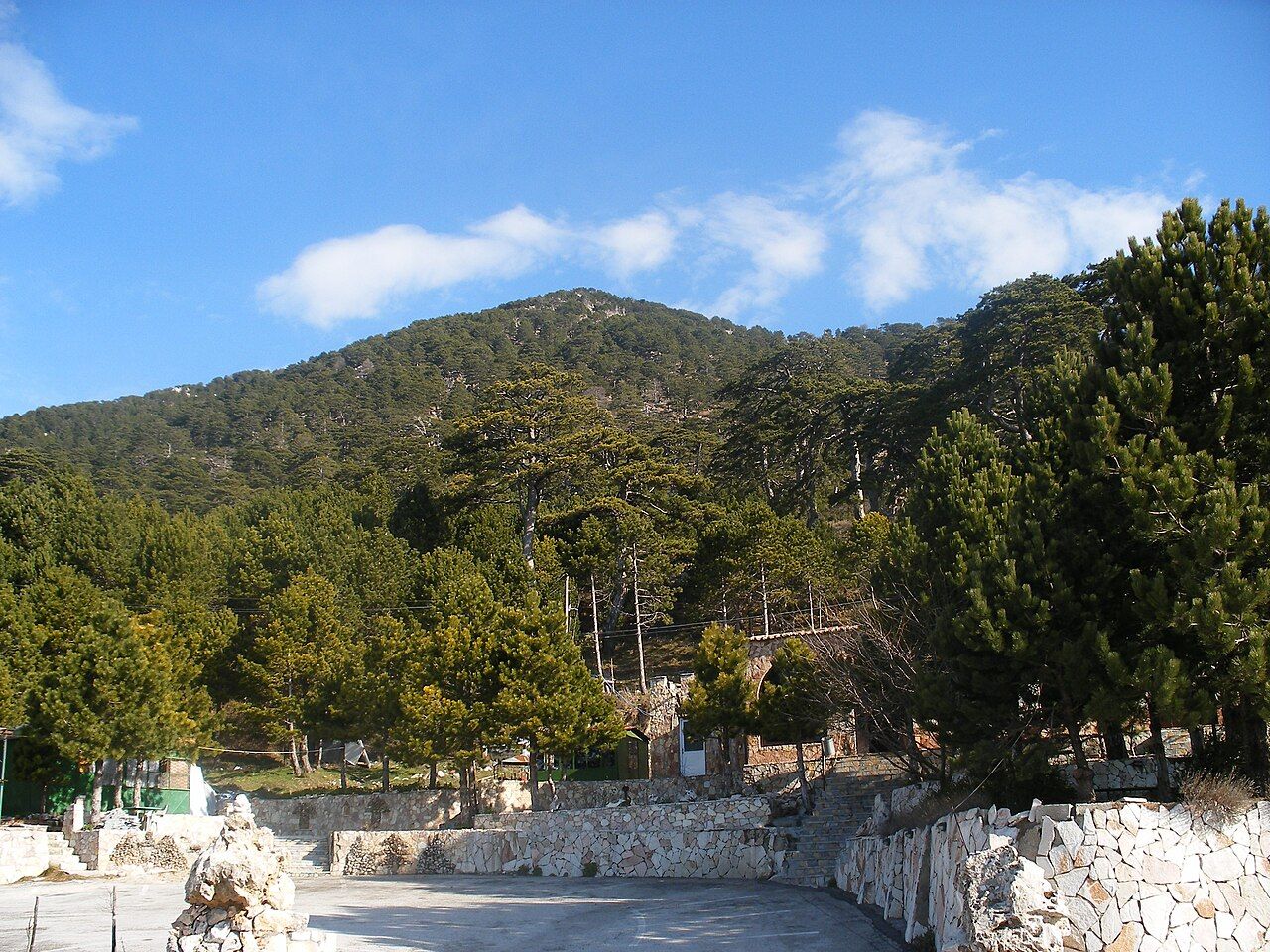
Near the crest the landscape changes almost at once. The bare limestone gives way to tall, dark trees, the temperature falls, and the smell of resin drifts through the open window. This is Llogara National Park, established in 1966, one of the older protected areas in Albania. It covers the upper slopes on both sides of the pass, with forests of black pine and fir, meadows, limestone outcrops and the high ridge that runs north-west towards the Karaburun peninsula.
The forest is a strange thing to find so close to a subtropical coast. Down at Dhërmi there are olives, figs and citrus; up here you could almost be in the Alps. The trees grow in open stands, with grass and rock between the trunks, and there are informal paths you can follow a short way from the road for a picnic or a stretch of the legs. Wild boar, deer and many birds live in the park, although you are more likely to see cows and goats than anything wilder.
The wind shapes many of the trees on the exposed ground. Gusts pouring over the ridge from the sea push the branches into lopsided crowns, and some pines grow almost horizontally, every limb streaming the same way. One of these, often called the flag tree, is bent so sharply by the wind that its branches stand out to one side like a banner. It is one of the most often photographed trees in the country, and finding it among its neighbours is a small pleasure in its own right.
There are places to eat and to stay around the top of the pass, mostly grouped near the road, and they are busy in summer with drivers breaking the journey. The forest itself is quiet a few minutes' walk away from them.
Onward · The RivieraDhërmi, Jale and the white-pebble covesParagliders and the wind
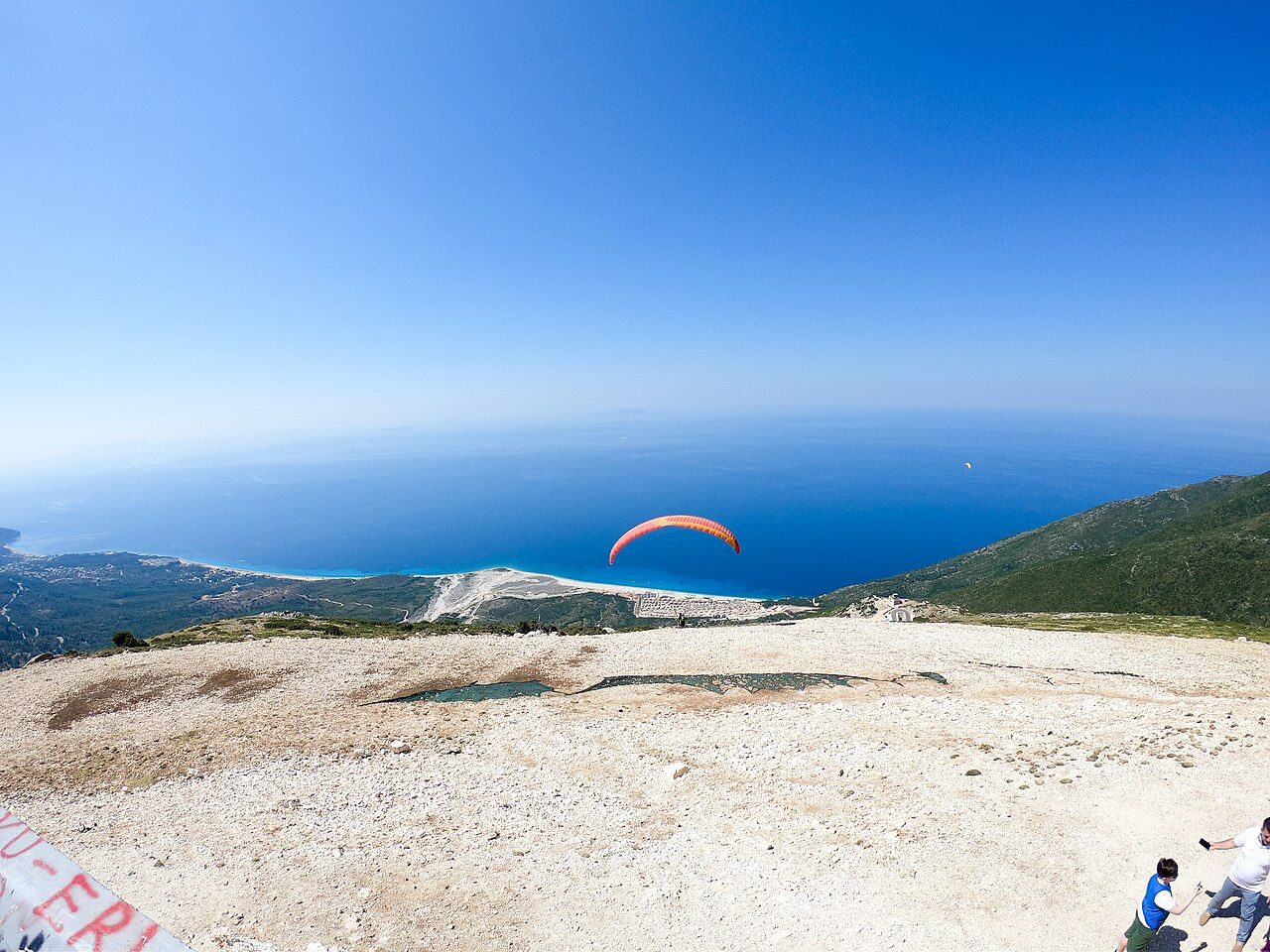
The same wind that bends the pines draws paragliders to Llogara. The open slopes above the coast face straight out to sea, and on the right days the breeze rising up the mountain gives enough lift for long, slow flights down towards the beaches at Dhërmi and Palasë. From a viewpoint you may see bright canopies hanging almost motionless against the blue, or swinging out over the sea before turning back towards the shore.
Tandem flights are offered in season, usually arranged on the spot or in the towns along the coast. If you are tempted, ask about experience, insurance and equipment, and accept that flights depend entirely on the weather on the day. Conditions on this ridge can change in minutes, and a good pilot will cancel without hesitation. Watching costs nothing, and the take-off areas offer some of the best views on the whole pass.
Weather a season apart
The single most useful thing to know about Llogara is that the top of the pass is not the beach. On a July day when Sarandë and Himarë sit in the thirties, the saddle can be ten degrees cooler or more, with a stiff wind and, sometimes, a blanket of cloud pouring over the ridge from the Vlorë side. You can drive up through bright sun and reach the crest in thick mist, then drop out of it again a few bends later.
Carry a warm layer even in high summer, and something more substantial in spring and autumn. In winter, snow and ice can settle on the upper section, and the road may be difficult or closed for short spells. Spring brings green meadows and flowers in the park, and the late season often has the clearest air, which is why many people think of May, June, September and October as the best months for the view. A quick look at the sky over the ridge before you leave the coast tells you most of what you need, and the guide to weather, seasons and timing goes further.
Driving the pass safely
The road surface on the SH8 over Llogara is generally good, and the climb is no harder than many mountain roads in southern Europe, but it asks for attention. A few habits make it easier.
- Use a low gear on the descent rather than riding the brakes, especially on the coast side, where the hairpins come one after another.
- Expect slow vehicles, buses and campers on the bends in summer. Overtake only where you can see well ahead, which on this road is rarely.
- Watch for livestock. Cows, goats and sheep graze along the verges near the top and sometimes stand in the middle of the road, often just round a blind corner.
- In fog, slow right down, use dipped headlights, and keep well back from the vehicle in front. Mist can thicken quickly at the crest.
- Fill the tank before the climb. Fuel stations are spaced out along the coast and there is little on the pass itself.
If you are prone to car sickness, the coast side is the harder part; sit in the front, look ahead, and stop at the viewpoints rather than pushing on. Cyclists use the pass too, mostly early in the day, so give them room on the climbs.
Fitting Llogara into a day
From central Sarandë, the drive to the top of the pass takes about two hours and fifteen minutes along the SH8, without stops. Nobody does it without stops. Most people treat it as the high point of a longer journey along the whole Riviera, with breaks at Borsh, Porto Palermo and Himarë on the way, and the full guide to the coast road north from Sarandë covers that drive bend by bend.
If you are staying around Dhërmi or Himarë and its old town, the pass is a short trip up the mountain, easy to fit into a morning or an evening. Going on north, the road descends through the forest and then down to Orikum, an ancient harbour on the Bay of Vlorë, and from there to the city of Vlorë itself. Coming back south in the late afternoon, with the sun lowering over the sea in front of you, is one of the finest drives on the coast.
It is the gate between two quite different coasts: the open Ionian Riviera on one side and the long, sheltered bay of Vlorë on the other.
However you plan it, give yourself time at the top. Stand at a viewpoint, walk a little way under the pines, feel the change in the air, and then take the bends slowly on the way down.